Most onboarding checklists were built for consultants and coaches, not for agencies that need to get inside a client's Meta Business Manager or set up a Google Ads conversion pixel before a single dollar of ad spend goes live. That gap is where a lot of agency owners lose the first week of a new client relationship: chasing logins, waiting on signed contracts, and manually rebuilding reporting templates for the third time this quarter. The tools below were chosen for how well they handle agency-specific onboarding tasks, including contracts, intake forms, payment setup, and ad account access, so you can compare them on the parts of the process that actually slow you down.
Quick Comparison
- ClientPlug.io: best for ad agencies unifying payments, ad performance, and reporting after signup; pricing on website; the only tool here built around Meta/Google Ads data and Conversion API setup.
- Dubsado: best for agencies wanting fully custom onboarding workflows; from ~$20/month; conditional-logic workflow builder unmatched in flexibility.
- HoneyBook: best for solo freelancers and small agencies wanting fast setup; from ~$19/month; visual pipeline tracking from inquiry to signed client.
- SuiteDash: best for growing agencies wanting one branded hub; from ~$19/month; fully white-label client portal.
- Plutio: best for small teams blending onboarding with delivery; from ~$19/month; Kanban boards spanning onboarding and active projects.
- Content Snare: best for agencies stuck waiting on client files and logins; from ~$37/month; automated reminder chasing built specifically for that bottleneck.
- Process Street: best for agencies standardizing steps across account managers; from ~$25/user/month; conditional branching for different ad platforms.
- Bonsai: best for solo freelancers onboarding a handful of clients; from ~$17/month; deep template library for fast first-time setup.
1. ClientPlug.io
ClientPlug.io is an all-in-one client organizer built specifically for digital marketing agencies and freelancers, and it picks up right where most onboarding tools stop: the moment a client signs on and you need to get their ad accounts, payments, and reporting working together. Instead of treating onboarding as a paperwork problem, ClientPlug treats it as an ad-operations problem, which is the part general-purpose onboarding software tends to ignore entirely.
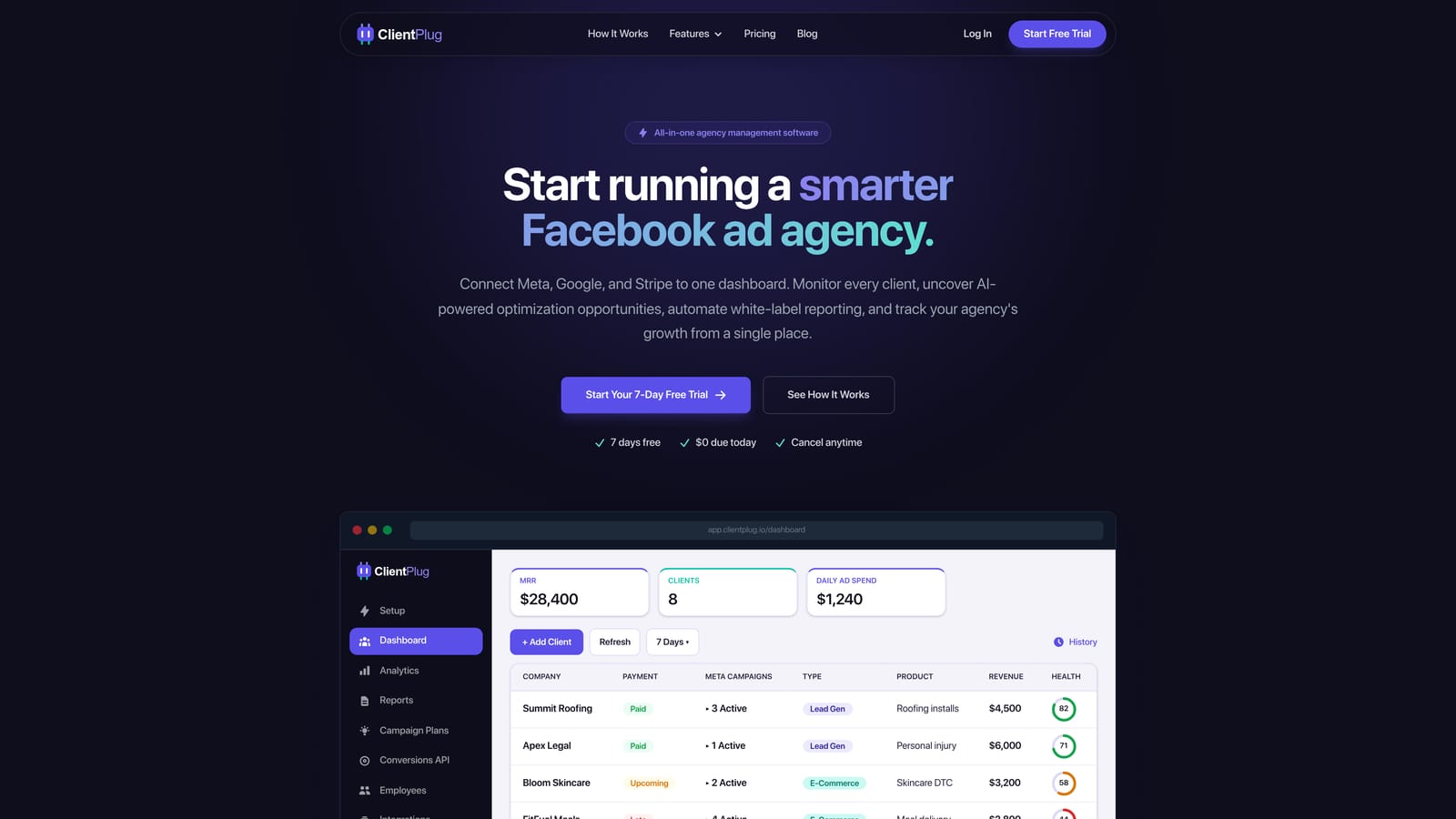
What sets it apart on this list is that it's the only tool built around Meta and Google Ads data from the ground up. Agencies that onboard PPC or paid social clients often spend the first few days just getting pixel access, setting up Conversion API, and rebuilding a reporting template. ClientPlug consolidates that into one dashboard.
- Centralizes client payments and campaign performance in a single dashboard, so you're not toggling between a payment processor and an ads dashboard during setup
- Surfaces AI-assisted optimization suggestions once campaigns go live, shortening the gap between onboarding and results
- Sends white-labeled, automated client reports, removing the need to build a reporting deck manually for every new account
- Sets up Conversion API in a few clicks, which matters for agencies dealing with iOS and browser tracking restrictions
- Monitors the health of individual ads, campaigns, and clients so problems surface before a client notices them
Setup is aimed at agency owners and account managers rather than developers, and it connects with Meta Ads, Google Ads, and common payment processors (worth confirming the current list on the site, since integrations get added over time). The tradeoff is that ClientPlug isn't a contract or e-signature tool, so agencies still need something to handle the very first onboarding step, gathering signed agreements, before ClientPlug takes over the ad-account and reporting side. Pricing is on monthly plans; check the website for current tiers as of 2026.
Best for: Ad agencies that want onboarding to end with ad accounts, payments, and reporting already unified in one place, paired with a separate contract tool for the paperwork stage.
2. Dubsado
Dubsado is a business management platform aimed at service businesses that want to build highly specific onboarding sequences without relying on a developer. It's designed for agency owners who onboard clients frequently enough that a generic form-and-email process no longer scales.
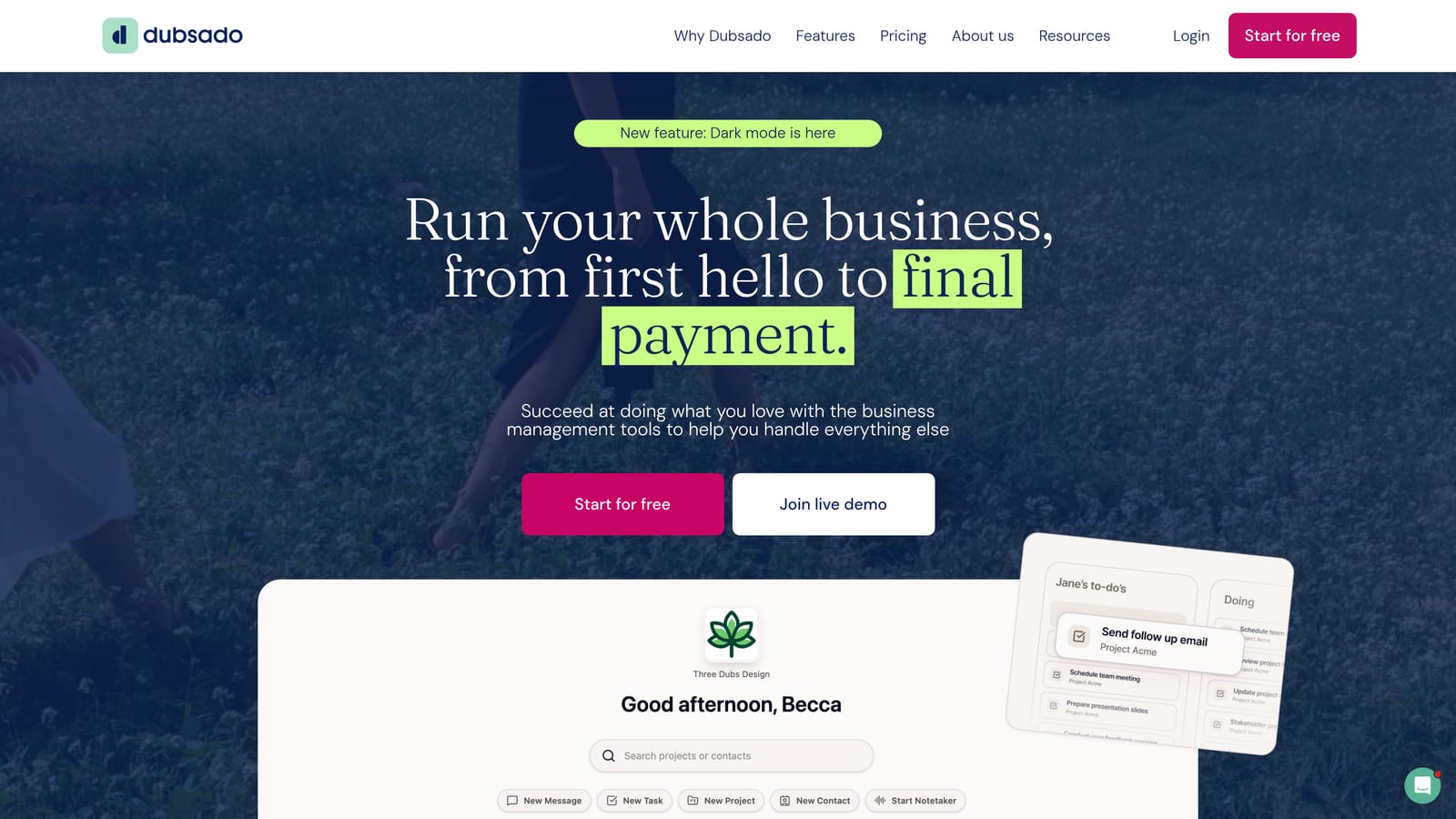
Its workflow builder is the standout. You can set conditional logic so that, for example, a Google Ads client gets routed through a different intake sequence than a Meta Ads client, with automatic emails, contract sends, and invoice triggers at each stage.
- Automated workflows that trigger contracts, forms, or emails based on what stage a client is at
- Built-in e-signature and contract templates so agreements don't require a separate tool
- A branded client portal where new clients can see everything they need to complete
- Scheduling and invoicing tied directly into the same workflow
Dubsado connects with Zapier, QuickBooks, and Google Calendar, which covers most agency accounting and scheduling needs. The catch is setup time: building out workflows with conditional branches takes real hours upfront, and new users often describe the learning curve as steep before the automation starts paying off. Plans start around $20/month as of 2026, though it's worth verifying current tiers before committing.
Best for: Agencies that want full control over building a custom, automated onboarding sequence and are willing to invest setup time upfront.
3. HoneyBook
HoneyBook combines proposals, contracts, payments, and scheduling into a single pipeline, and it's built for freelancers and small agencies who want something running in days, not weeks.
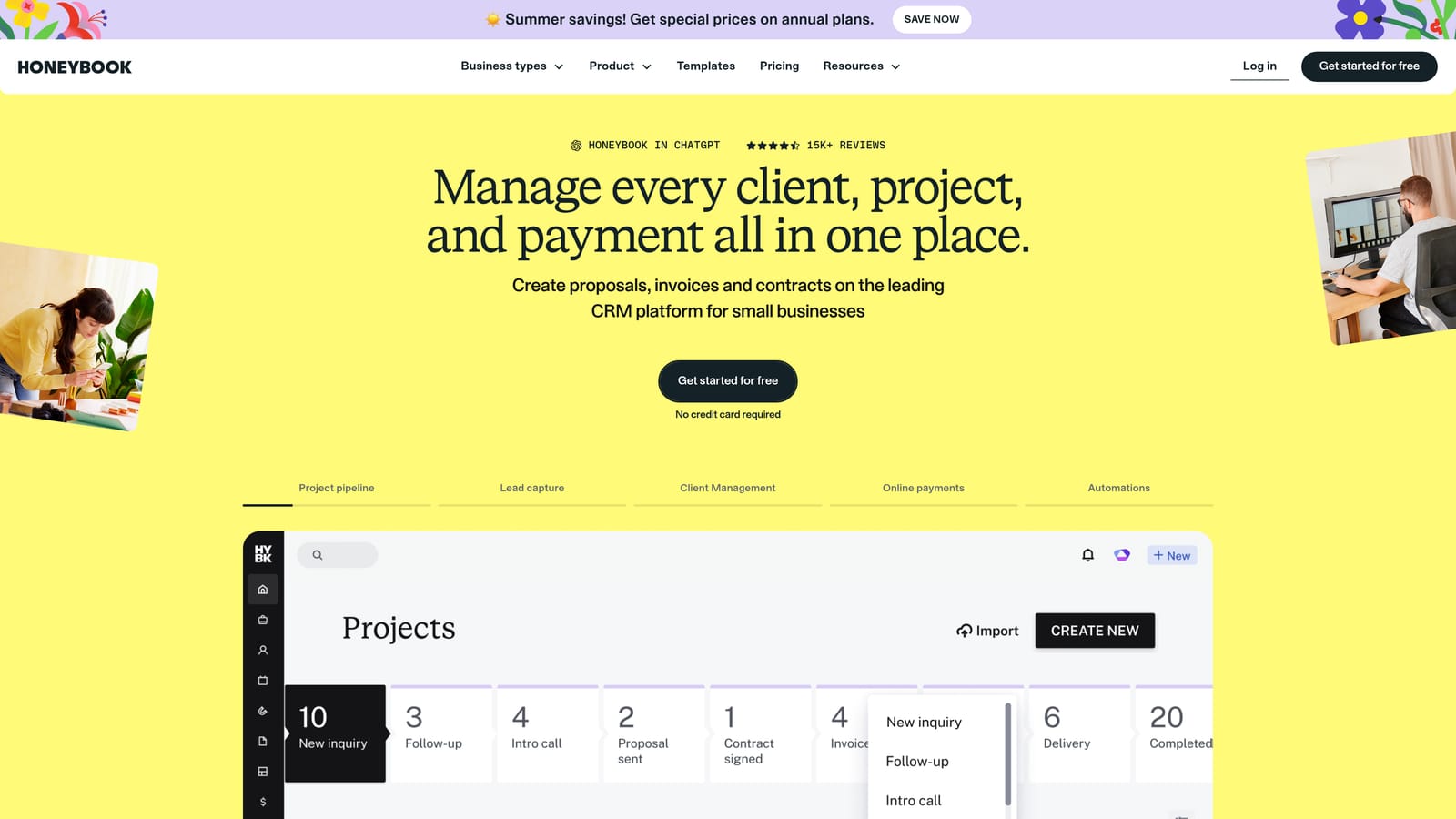
The pipeline view is what differentiates it here: every lead moves through visible stages from first inquiry to signed and onboarded client, which gives solo owners and small teams a simple way to see where each prospect stands without a separate CRM.
- Bundles proposals and contracts into one document a client signs in one sitting
- Automated pipeline stages that move clients forward without manual follow-up
- A client portal with built-in scheduling for kickoff calls
- Payment processing built directly into the platform, so invoicing doesn't require a separate app
It integrates with Zapier, QuickBooks, and Gmail, and setup is quick enough that most solo users are running their first workflow within a day. The limitation is depth: HoneyBook's automation is simpler and less granular than Dubsado's, so agencies with complex, multi-branch onboarding rules will hit its ceiling faster. Plans start around $19/month as of 2026.
Best for: Solo freelancers and small agencies that want fast setup over deep customization.
4. SuiteDash
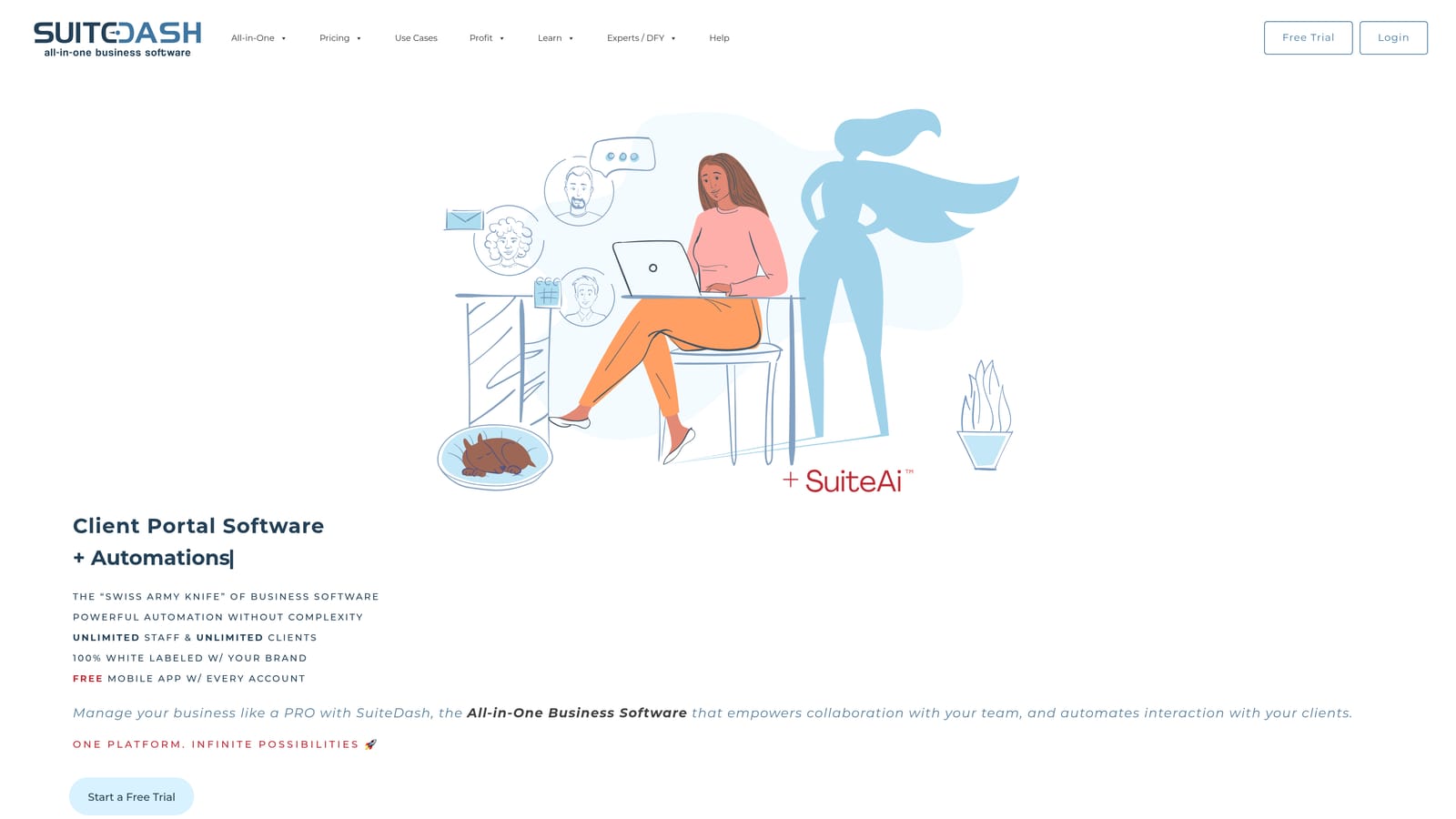
SuiteDash is built for agencies that want a fully white-label portal covering onboarding and everything after it, rather than a tool that hands clients off to another system once they're signed.
Why it stands out
The portal can be branded entirely as your own, with no SuiteDash mention visible to clients. For agencies managing dozens of clients, presenting one consistent, branded experience from onboarding through ongoing project updates carries real weight with clients who are comparing you to competitors.
- A white-label client portal that clients experience as your own software
- Onboarding workflow automation that moves new clients through defined steps
- Project and task management so onboarding flows directly into delivery
- Invoicing and proposal tools built into the same system
Setup and fit
SuiteDash integrates with Zapier, Stripe, and Google Calendar, and it's typically run by an agency owner or operations lead rather than delegated to a junior hire, given how many settings there are to configure. That breadth is also its downside: the initial setup takes noticeably longer than single-purpose onboarding tools, since you're configuring a full client hub rather than one workflow. Plans start around $19/month as of 2026.
Best for: Growing agencies that want one branded system for onboarding plus ongoing client management.
5. Plutio
Plutio is a business management workspace that bundles onboarding forms, proposals, contracts, tasks, and time tracking, aimed at small agency teams that don't want separate tools for sales and delivery.
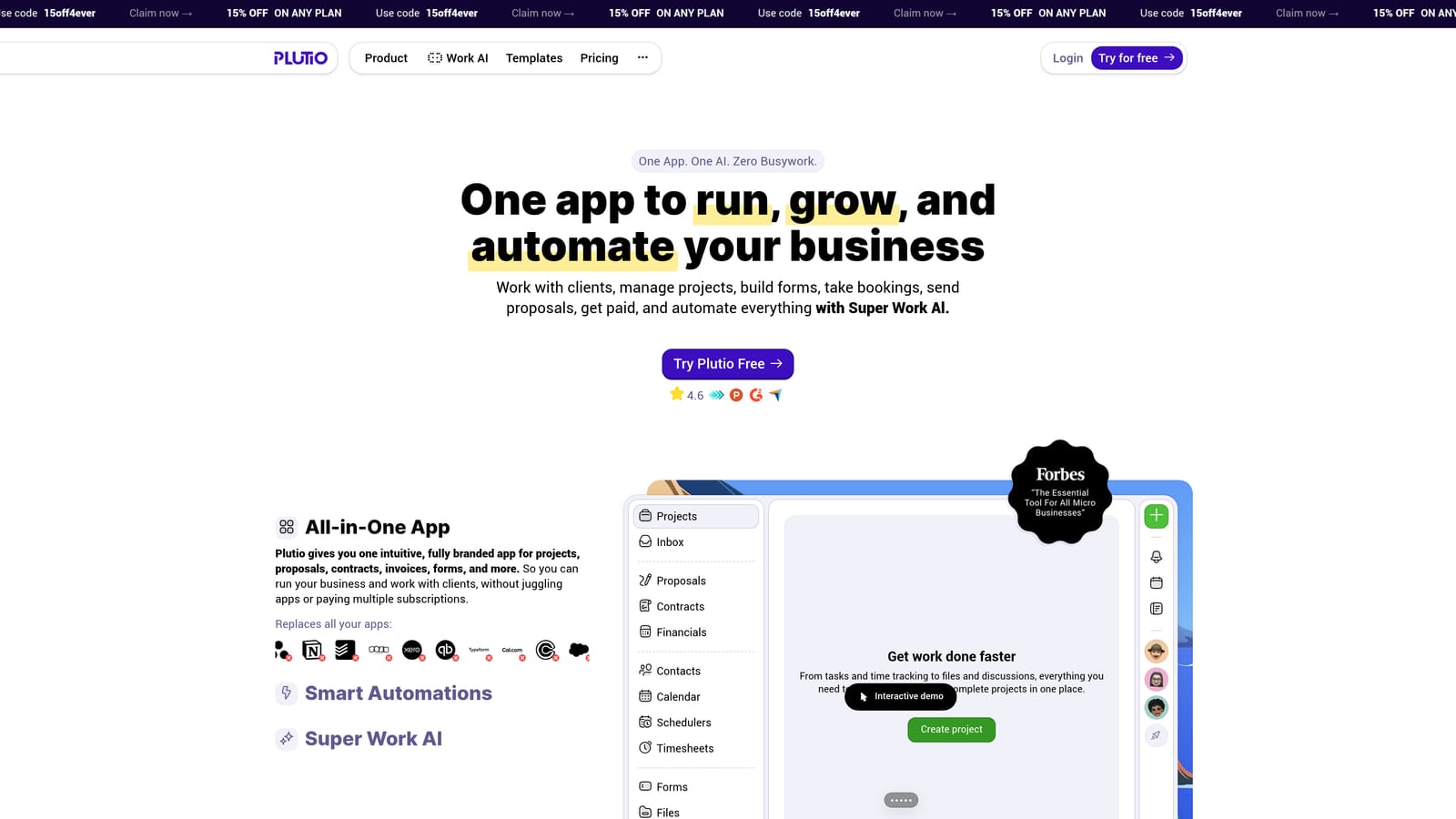
Its Kanban-style client boards are the notable feature: you can see a new client's onboarding checklist sitting right alongside active project tasks, which keeps account managers from losing track of half-finished intake steps once real project work starts.
- Onboarding forms and proposals that convert directly into client records
- Kanban boards that track onboarding progress next to live project tasks
- Task and time tracking built into the same workspace as onboarding
- Invoicing tied to the same client record from day one
Plutio connects with Zapier, Stripe, and Google Calendar, and it's generally run day-to-day by whoever manages client accounts rather than a dedicated ops person. It suits teams that want onboarding and delivery in one workspace more than agencies looking for a standalone onboarding tool, since a lot of its value comes from the project management side rather than intake alone. Plans start around $19/month as of 2026.
Best for: Small agency teams that want onboarding and project delivery tracked in the same workspace.
6. Content Snare
Agencies whose biggest onboarding delay is waiting on clients to send files, logins, or ad account access will recognize the problem Content Snare was built to solve. It's not a broad business management tool. It's a focused system for collecting information from clients who are slow to respond.
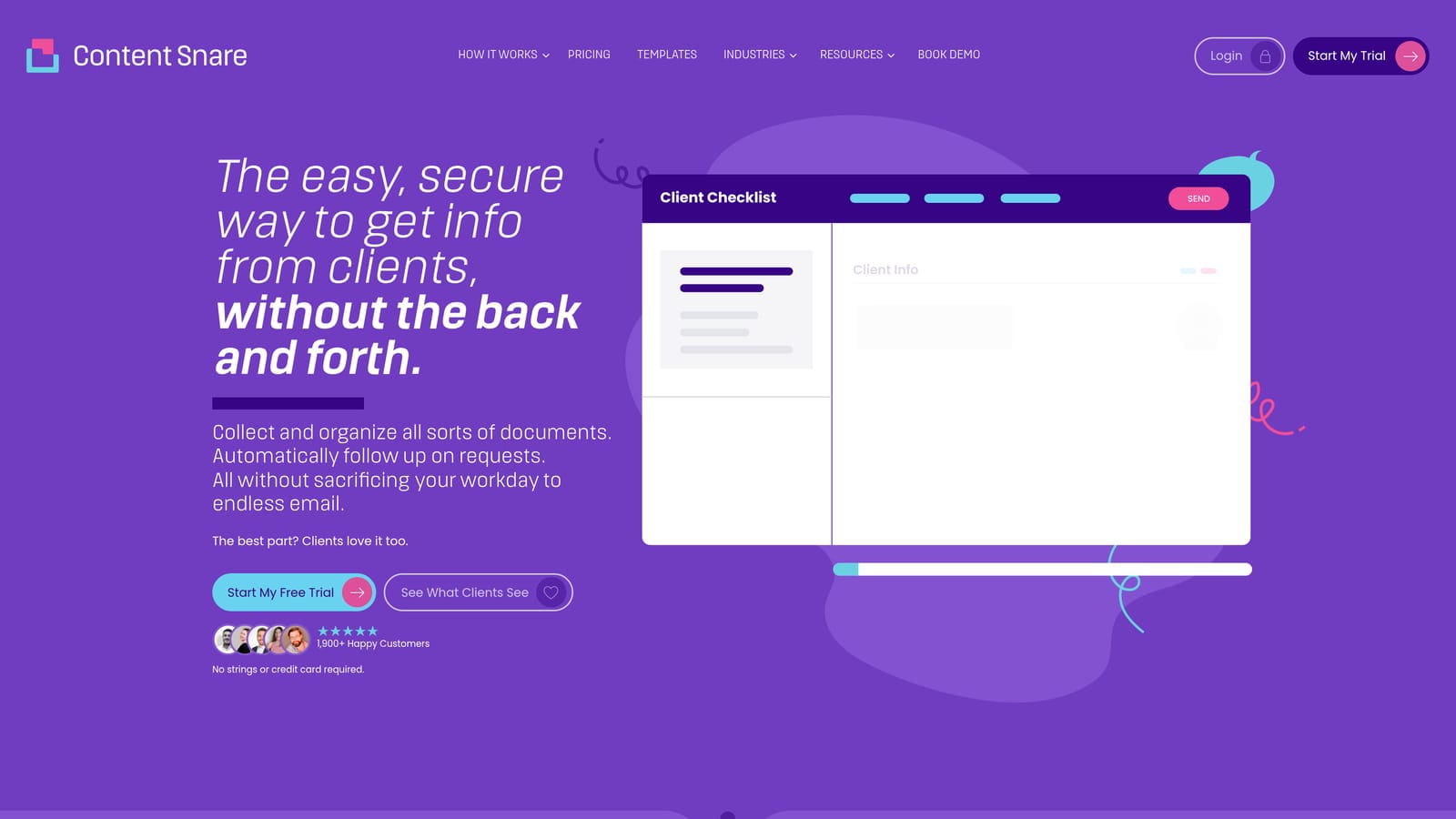
The standout feature is automated chasing: instead of an account manager manually emailing a client for the fifth time about missing Meta Business Manager access, Content Snare sends reminders automatically until the request is fulfilled.
- Automated reminder emails that follow up on missing information without manual nagging
- Templates for requesting files and account access, reusable across every new client
- Progress tracking that shows exactly what's outstanding for each client
- Reusable request templates that speed up every repeat onboarding after the first
It integrates with Zapier, Asana, and Trello, and it's typically set up once by an agency owner and then reused by whoever handles client intake. Its narrow focus is also its main limitation: there are no contracts, payments, or proposal tools, so it has to be paired with something like Dubsado or HoneyBook to cover the rest of onboarding. Plans start around $37/month as of 2026.
Best for: Agencies whose biggest onboarding bottleneck is clients being slow to send assets and account access.
7. Process Street
Process Street is checklist and SOP software built to standardize repeatable processes, and for agencies it works best as the internal backbone that keeps onboarding consistent no matter which account manager runs it.
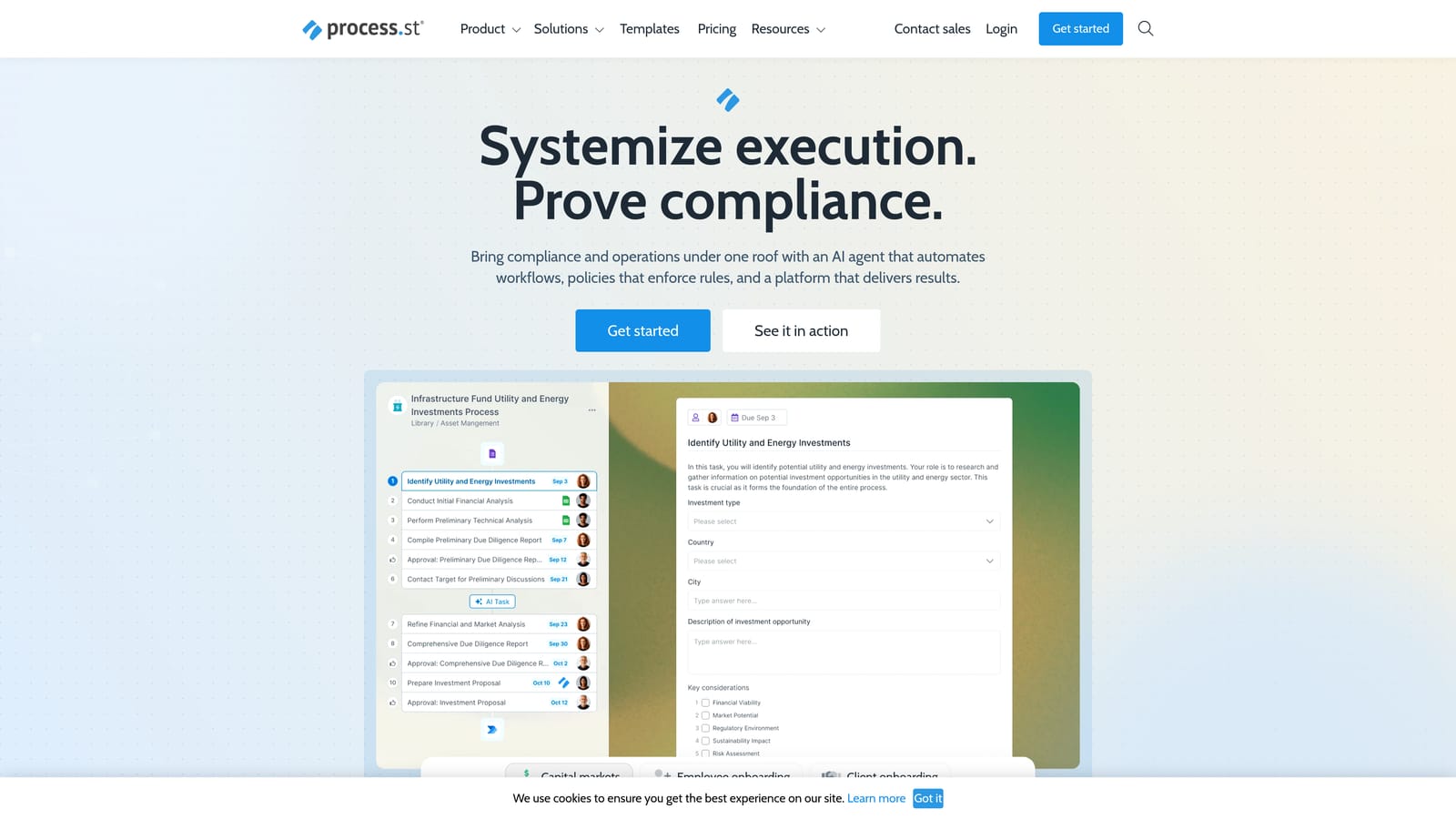
Its conditional-logic checklists are the differentiator for marketing agencies specifically: one master onboarding checklist can branch automatically depending on whether the client is running Google Ads, Meta Ads, or both, so account managers aren't building separate checklists from scratch for each platform.
- Conditional-logic checklists that adapt automatically based on client type
- Role-based task assignment so the right person handles each onboarding step
- Recurring workflow templates for agencies onboarding clients on a regular cadence
- Approval steps built into checklists so nothing launches without sign-off
Process Street integrates with Zapier, Slack, and Salesforce, and it's usually owned by an operations lead who maintains the templates while account managers execute them. It doesn't handle contracts, proposals, or payments, so it works best as the SOP layer sitting behind a client-facing tool rather than the client's first point of contact. Plans start around $25 per user per month as of 2026.
Best for: Agencies with an established onboarding process that want consistency across every account manager.
8. Bonsai
Bonsai is built for freelancers and very small teams, bundling contracts, proposals, intake forms, invoicing, and time tracking into one tool aimed at getting a first onboarding process running quickly.
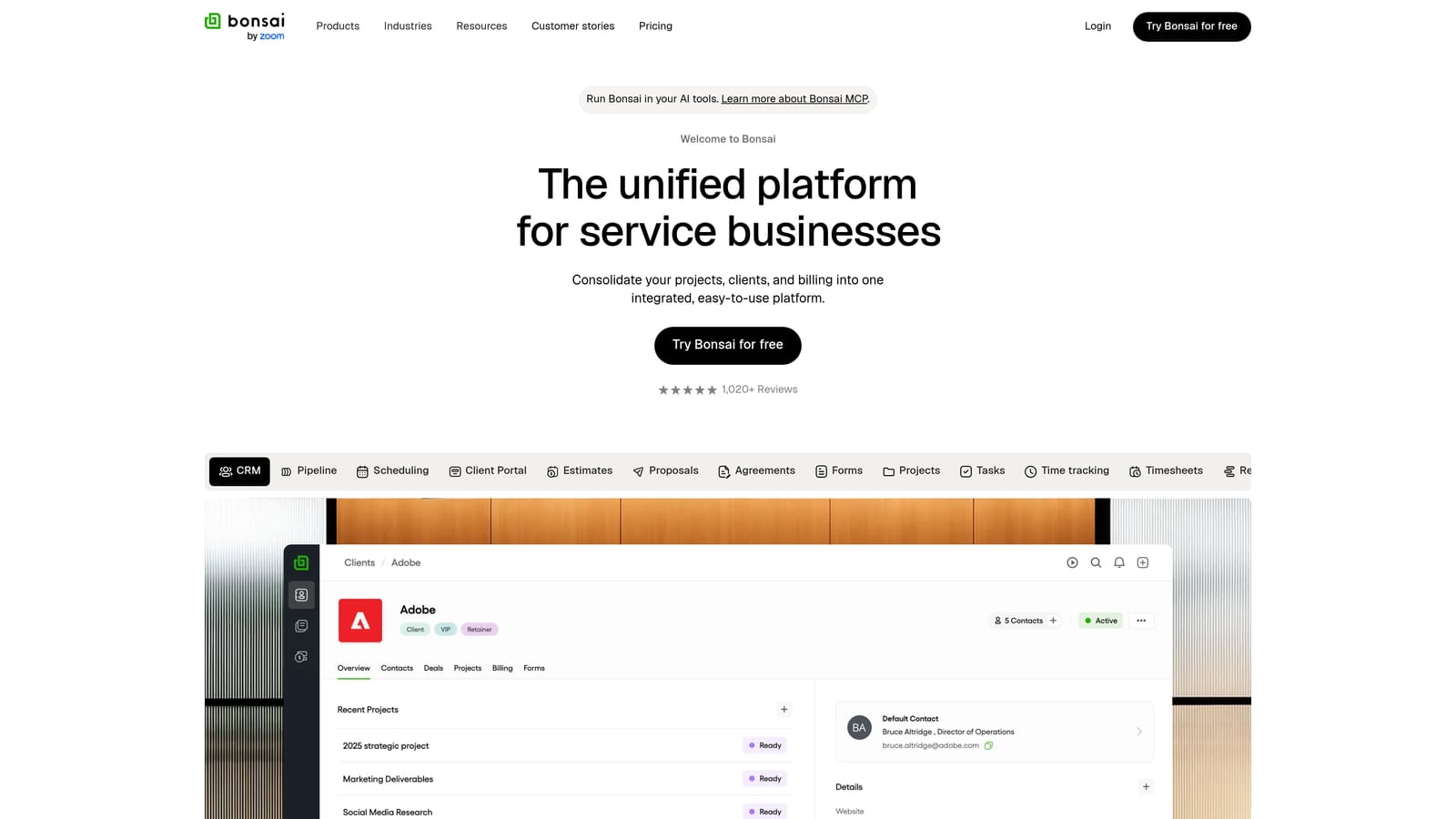
Its template library is deep enough that a solo operator can go from zero to a working contract-and-intake sequence in under an hour, which matters for freelancers who don't have time to build workflows from scratch the way agencies using Dubsado might.
- Contract and proposal templates covering common freelance and small-agency scenarios
- Client intake forms that plug directly into the same client record
- Invoicing and time tracking built into the same workspace
- Tax and expense tracking aimed specifically at freelancers rather than teams
Bonsai connects with Zapier, QuickBooks, and Stripe, and it's designed to be run entirely by one person without needing a dedicated ops role. The tradeoff shows up as client volume grows: its client portal is noticeably less robust than SuiteDash's or HoneyBook's, so agencies juggling a high volume of active clients tend to outgrow it. Plans start around $17/month as of 2026.
Best for: Solo freelancers or very small teams onboarding a handful of clients at a time.
Matching the Tool to Where Onboarding Breaks Down
The right pick depends on which part of onboarding actually costs you time. If your pain point is what happens after the contract is signed, getting ad accounts connected, Conversion API set up, and reporting running, ClientPlug is built for exactly that gap and pairs well with a contract tool for the front end. If your bottleneck is the paperwork itself, Dubsado gives you the most control over a custom sequence, while HoneyBook gets a simpler version running faster.
Agencies that want a single branded hub for everything, not just onboarding, should look at SuiteDash or Plutio depending on team size. And if the real problem is standardizing intake and kickoff so every account manager runs it the same way, Content Snare fixes the chasing-clients-for-files problem specifically, while Process Street fixes the consistency problem across your team.
None of these tools need to work alone. Many agencies end up running a contract tool for signing, ClientPlug for the ad-operations and reporting side, and an SOP layer like Process Street to keep it all consistent as the team grows. Learn more about our services to see how ClientPlug fits into that stack.