Running Meta and Google Ads for several clients usually means a pile of ad platform logins, spreadsheets, and a reporting tool that someone rebuilds every month. The tools below were chosen for how well they track client ad campaigns across accounts, how usable their client reporting is, how they handle multi-client management, and how pricing scales for small and mid-sized agencies. They fall into three groups: all-in-one client organizers, reporting and dashboard tools, and data connectors or attribution platforms. Picking by workflow matters more than counting features.
Quick Comparison of Each Tool
- ClientPlug: small to mid-sized agencies and freelancers; pricing on the website; tracks client payments alongside Meta and Google Ads performance and health.
- Databox: agencies tracking KPIs against targets; free plan available; goal-based scorecards across ads, CRM, and analytics.
- AgencyAnalytics: full-service agencies reporting on ads, SEO, and social; pricing on the website; branded client portal on a custom domain.
- Supermetrics: agencies with analysts and custom templates; pricing on the website; connectors that feed your own spreadsheets and BI tools.
- Looker Studio: Google-heavy agencies on a tight budget; free; native Google data with fully customizable reports.
- Swydo: PPC-focused agencies; pricing on the website; PPC report templates that include Microsoft Ads.
- Funnel.io: larger agencies with complex multi-channel spend; quote-based; normalizes naming and metrics across channels.
- Madgicx: Facebook and Instagram ad agencies; pricing on the website; Meta-specific AI optimization and creative insights.
- Triple Whale: Shopify and DTC ecommerce agencies; pricing on the website; ties ad spend to store revenue and profit.
1. ClientPlug
ClientPlug is the all-in-one client organizer built for digital marketing agencies and freelancers. It pulls Meta and Google Ads performance, client payment status, and reporting into one dashboard, so the question "how is this client doing?" covers both the ads and the invoice.
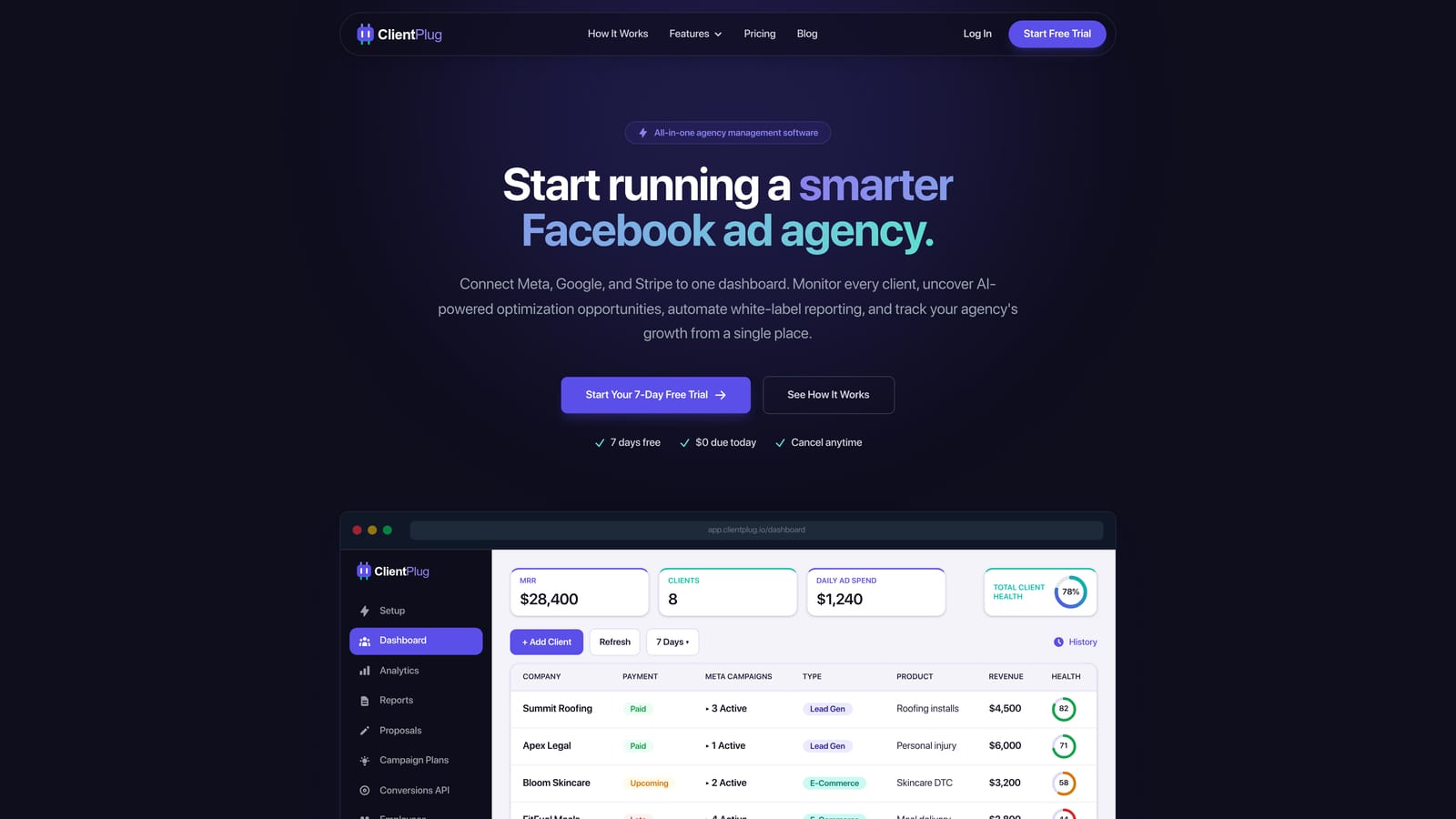
Its distinctive angle on this list is that it combines ad performance with payment tracking, and monitors health at every level: individual ads, campaigns, clients, and the agency as a whole. Most reporting tools show you numbers; this one is built to help you notice which account needs attention. Most other tools here do not touch client payments at all.
- Auto-synced Meta and Google Ads data, so you are not exporting CSVs to see spend and results.
- Client payment tracking, so you can see who has paid and who is overdue next to their campaign performance.
- Automated white-label reports that go to clients without you rebuilding them each cycle.
- AI campaign optimization to suggest improvements on live accounts.
- Conversion API setup in a few clicks, which sends server-side events to Meta and helps with tracking accuracy without a developer.
Setup centers on connecting your Meta and Google Ads accounts, and it is designed to be run by the agency owner or a small team rather than a dedicated analyst. Its integrations are focused on those two platforms.
The limitation is scope. ClientPlug is focused on Meta and Google for agencies and freelancers. If you need LinkedIn, SEO, or a dozen other channels in one report, or you work in-house, it is not designed for that. Pricing is listed on the website, so check current plans there.
Best for: Small to mid-sized agencies and freelancers who want to run client operations and ad tracking from one place.
2. Databox
Databox is a dashboard and KPI tracking platform that pulls data from ad platforms, analytics, CRM, and spreadsheets into a single view. It suits agencies whose clients care about outcomes beyond ad metrics, such as pipeline numbers or store revenue.
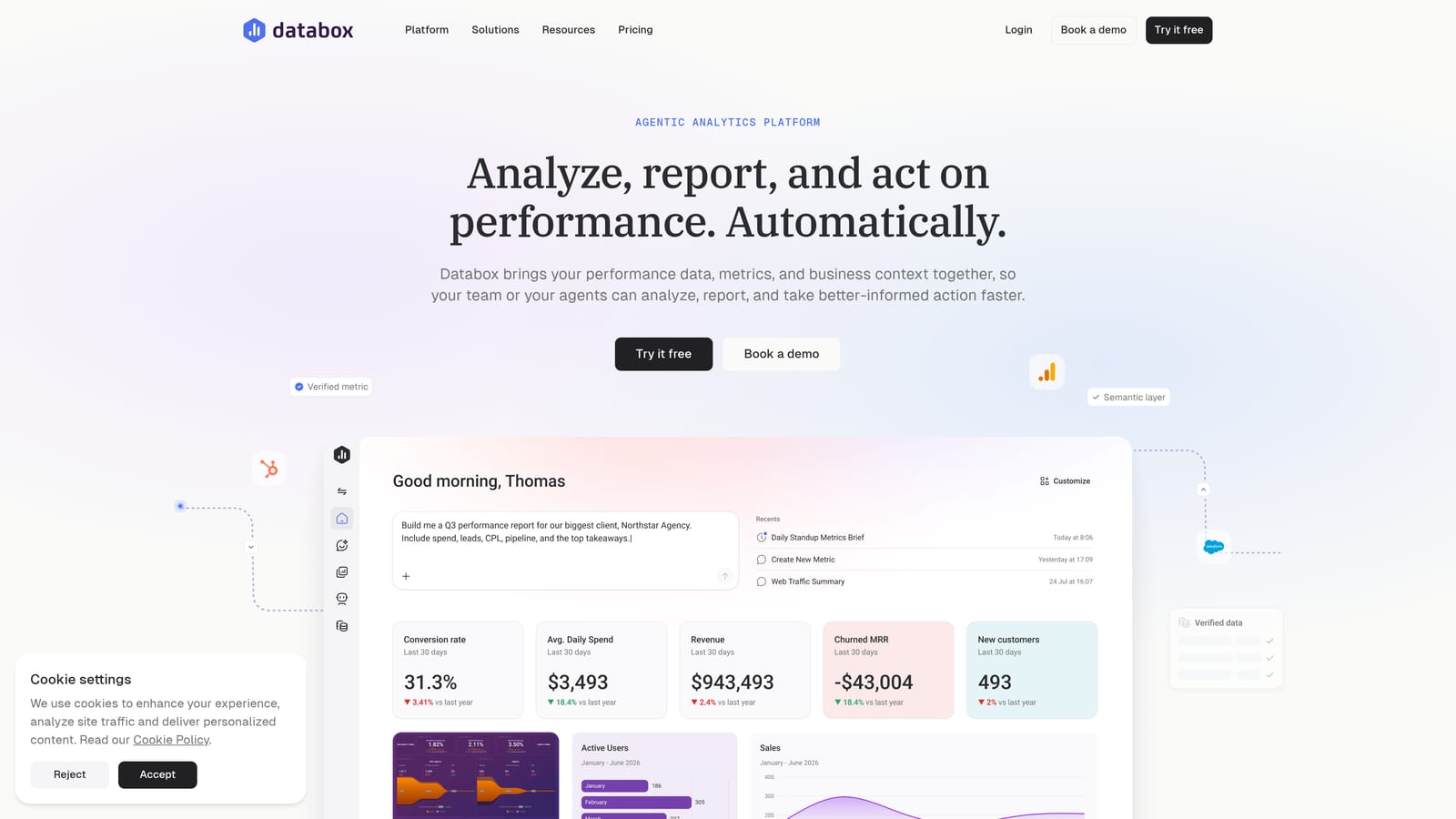
What sets it apart here is goal-based scorecards. You set a target, and the dashboard shows whether the account is ahead or behind it, across sources like Google Ads, Meta Ads, Google Analytics, HubSpot, and Shopify.
- A large integration library, so ad, web, and CRM data can sit in one dashboard.
- A custom dashboard builder for views tailored to each client.
- Goals and scorecards that show progress against targets instead of raw numbers.
- Scheduled report snapshots delivered to clients or your team.
- Pre-built templates that shorten the first setup.
Setup effort is the trade-off. Databox is less opinionated about ad optimization, so you spend time deciding which metrics matter and building the views. Someone on your team, usually an account manager or analyst, needs to own that work. It also does not manage client payments or suggest campaign changes.
There is a free plan with limits. Paid tiers vary by plan, so confirm current pricing on the website as of October 2026.
Best for: Agencies tracking KPIs against targets that span ads, CRM, and web analytics.
3. AgencyAnalytics
AgencyAnalytics is a reporting and dashboard platform designed for marketing agencies, with client logins and white-label options. It is the broadest reporting tool in this list for agencies selling more than paid ads.
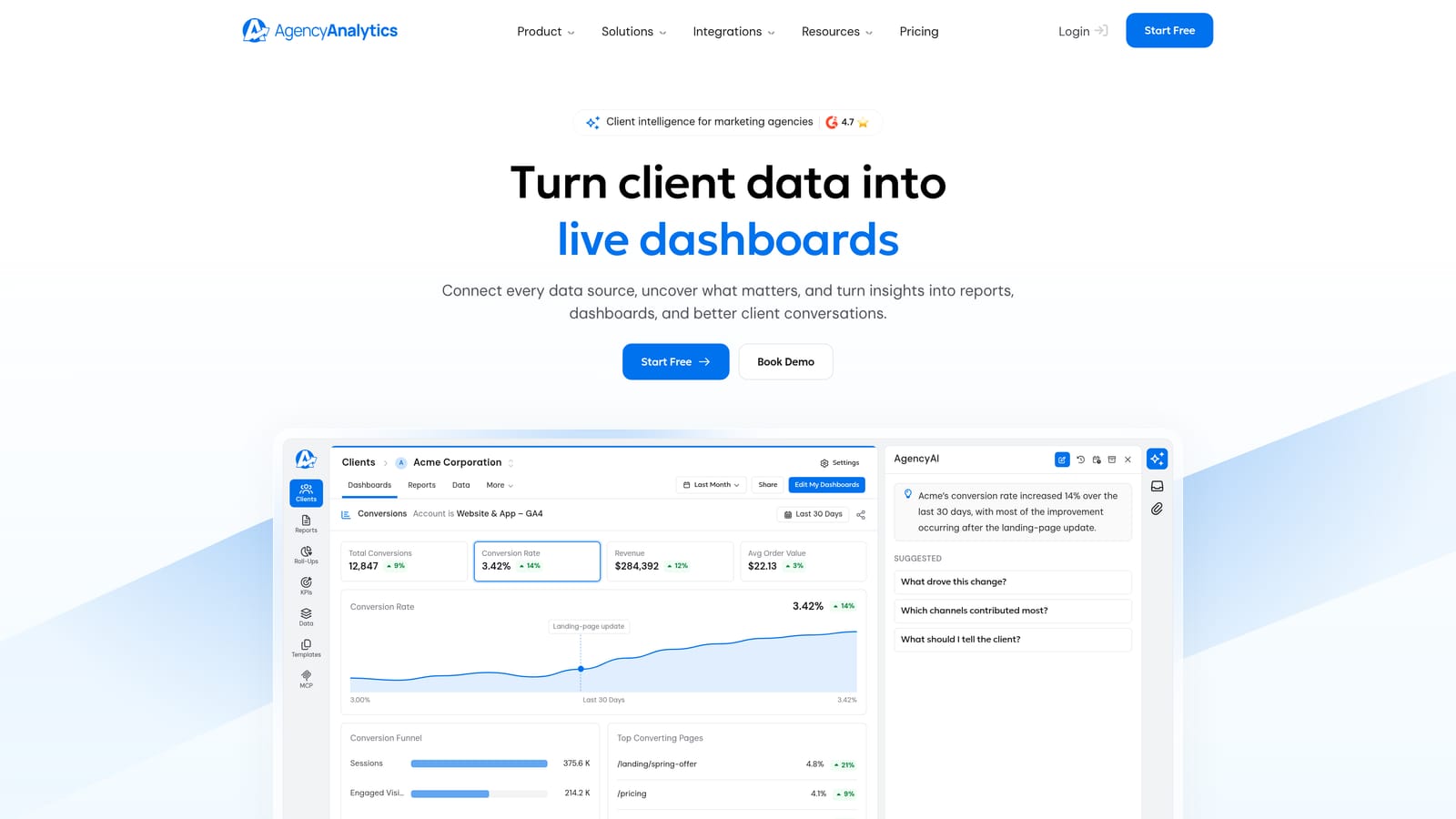
Its strongest point is the client-facing portal: a branded dashboard on your own custom domain, where clients can log in and check results themselves. Coverage across channels is wide, including Google Ads, Meta Ads, Google Analytics, Search Console, and LinkedIn Ads.
- Many marketing integrations, so paid, organic, and social results appear in one report.
- White-label dashboards and a custom domain, so clients see your brand, not the vendor's.
- Scheduled PDF reports for clients who prefer an emailed summary.
- A client login portal that cuts down on "can you send me the numbers?" emails.
- Rank tracking and SEO tools for agencies that also sell search.
It is reporting-focused. There is no payment tracking and no direct ad optimization, so it shows what happened without helping you act on it. Setup is moderate: connect each client's accounts, then apply templates. It is typically run by account managers.
Pricing is generally structured per client campaign, which means cost rises as your roster grows. Model that against the clients you expect to add, and check current rates on the website.
Best for: Full-service agencies that report on ads, SEO, and social together.
4. Supermetrics
Supermetrics is a data connector, not a dashboard. It moves ad platform data into Google Sheets, Excel, Looker Studio, BI tools, and data warehouses such as BigQuery.
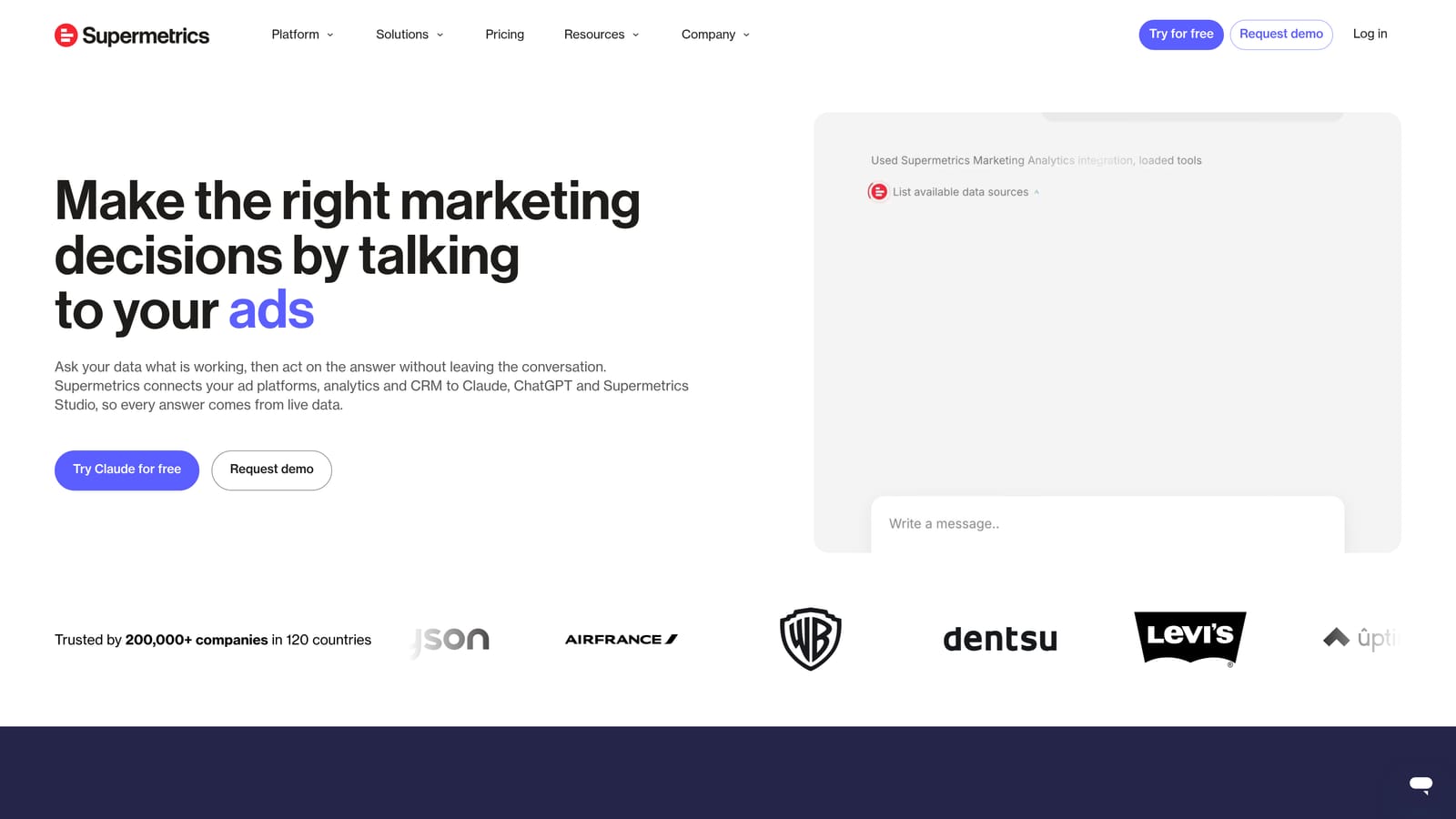
The advantage is flexibility. If your agency already has report templates in spreadsheets or a BI tool, Supermetrics feeds them live data from Meta Ads and other platforms without changing how you work.
- Connectors for many ad platforms, so one subscription covers a mixed channel roster.
- Google Sheets and Excel destinations for teams that live in spreadsheets.
- Looker Studio connectors, which solve the paid Meta data gap for that free tool.
- Data warehouse transfers for agencies that store historical data centrally.
- Scheduled refreshes, so reports update without manual pulls.
The limitation is that it is a data pipe. Nothing here is a client-facing dashboard, a portal, or an alert system. You build the reports elsewhere, which assumes someone with spreadsheet or BI skills runs them day to day. A freelancer without that time will feel the gap.
Pricing depends on the destination and connector bundle you choose, so work out which combination you need before comparing it with all-in-one tools. Confirm figures on the website as of October 2026.
Best for: Agencies with analysts who build custom reports in spreadsheets or BI tools.
5. Looker Studio
Looker Studio is Google's free reporting tool for building shareable dashboards from Google Ads, Google Analytics, and other connected sources. For many freelancers it is the first reporting tool they use.
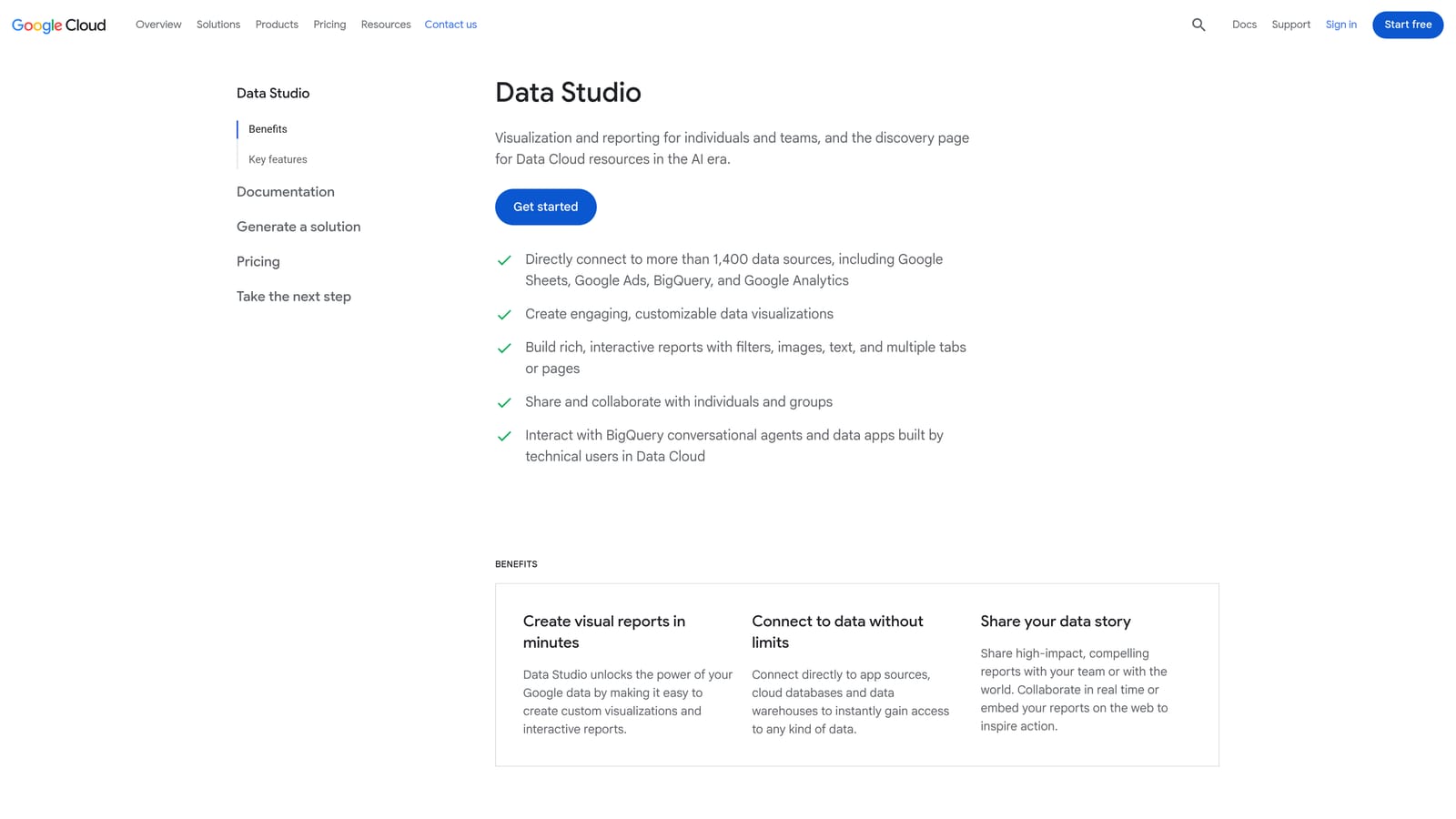
Its edge is cost and customization. You get native Google Ads and Analytics connectors at no charge, plus the freedom to design reports however you like.
- Native Google Ads and Analytics connectors that need no extra subscription.
- Shareable report links, so clients can view a live report without a login system.
- Template reuse, so one good layout can serve every client.
- Data blending to combine sources in a single chart or table.
- Custom visuals for reports that match a client's preferences.
The free label hides a cost. Meta data requires paid third-party connectors, which can bring in tools like Supermetrics or similar. There is also no client management and no alerts, so a campaign can go wrong without anything telling you. Someone must build and maintain each report, and fixing broken connections falls on you.
The tool itself is free, with connector costs extra depending on what you add.
Best for: Google-heavy agencies and freelancers on a tight budget.
6. Swydo
Swydo is a report automation tool for PPC and marketing agencies, built around templates and scheduled delivery. It aims at one job: getting recurring client reports out quickly.
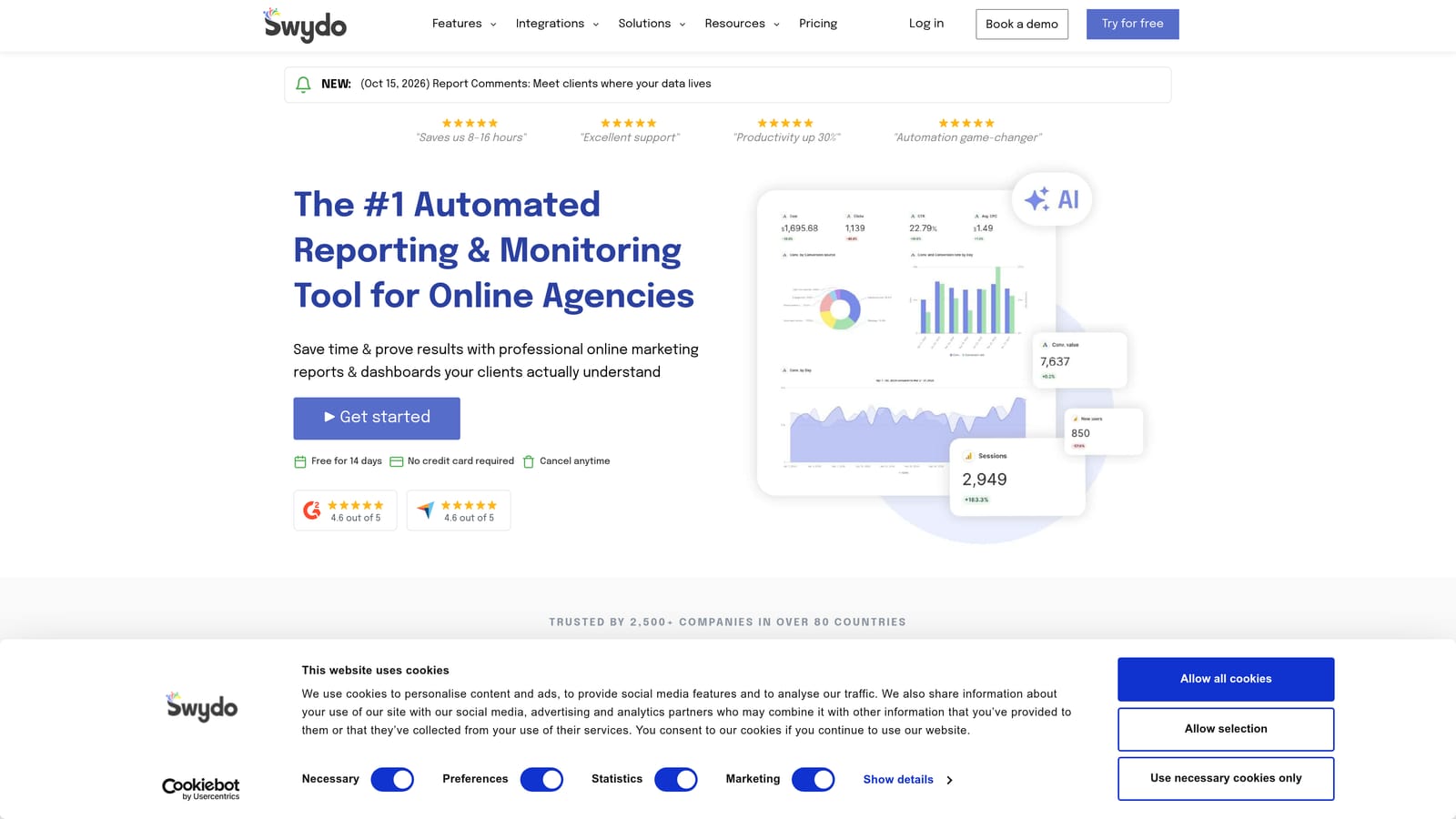
What it does that others here do not is offer PPC-specific templates that cover Microsoft Ads alongside Google and Meta. Agencies running search across multiple engines get a ready layout instead of a blank canvas.
- Automated report scheduling, so monthly reports arrive without manual assembly.
- PPC-focused templates that start you close to a finished report.
- Performance and goal widgets that show results against targets.
- White-label branding on higher plans, so higher tiers matter if you resell reports under your name.
- Multi-account management for handling many clients from one login.
It is narrower than all-in-one platforms. Swydo focuses on reporting, so it does not track payments or optimize campaigns. Integrations include Google Ads, Meta Ads, Microsoft Ads, Google Analytics, and LinkedIn Ads. Setup is light, and it is usually run by whoever produces client reports.
Plans are tiered, and white-label features sit on higher ones. Check the website for current pricing as of October 2026.
Best for: PPC-focused agencies wanting fast, templated recurring reports.
7. Funnel.io
Funnel.io is a marketing data hub that collects, cleans, and standardizes ad spend and performance data from many platforms. It is infrastructure for agencies whose data has become messy.
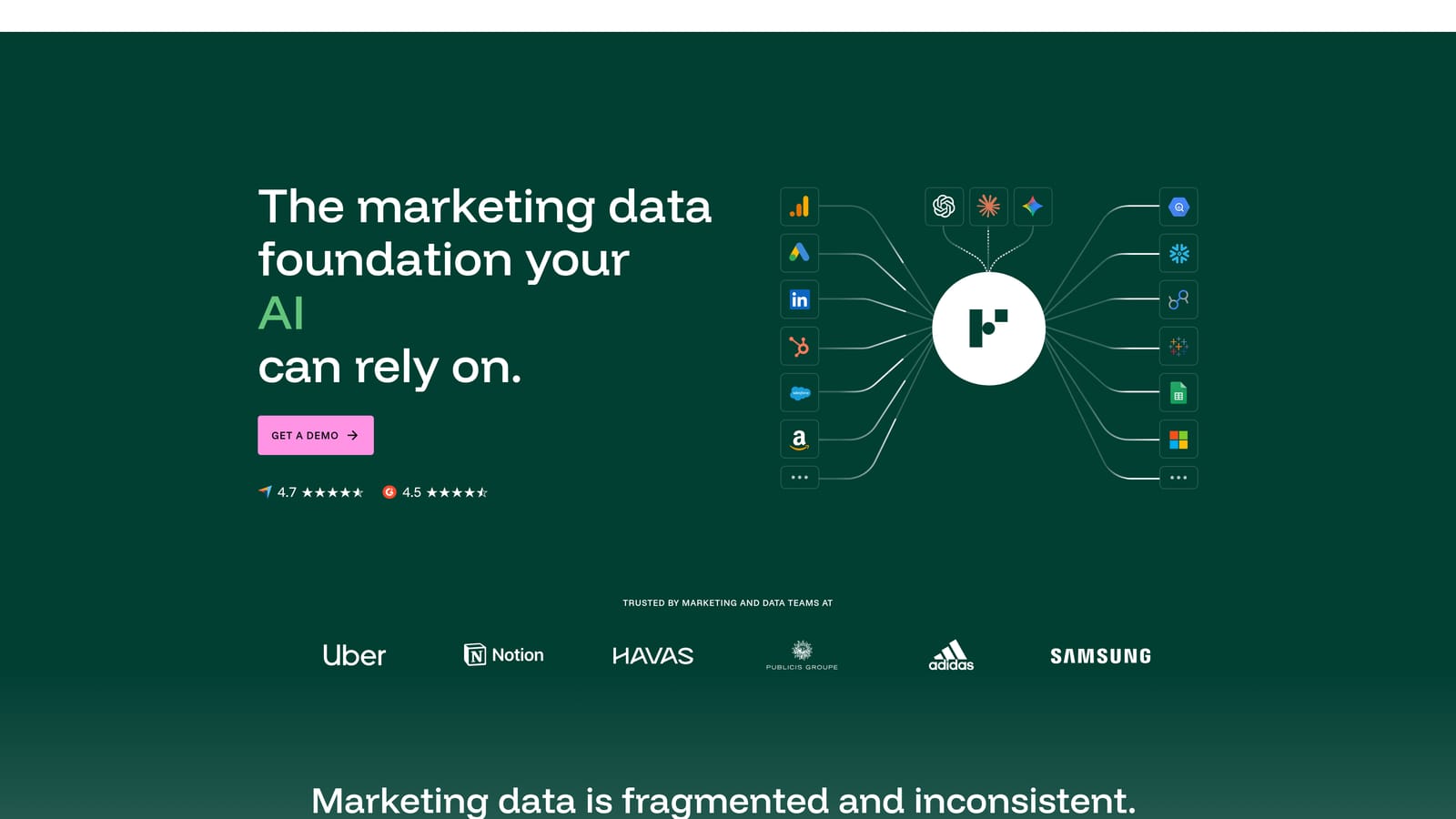
Its distinctive strength is normalization. When one client calls a campaign by one naming pattern on Meta and another on Google, Funnel.io's rules and mapping bring them to a single standard, so cross-channel comparisons make sense.
- Automated data collection, which removes manual exports from each platform.
- Metric and naming normalization for apples-to-apples comparisons across channels.
- Export to BI tools and warehouses, including Looker Studio, Google Sheets, and BigQuery.
- Many ad platform connectors, including Meta Ads and Google Ads.
- Data rules and mapping that you set once and apply to every new account.
The trade-off is weight. Setup is heavier, and cost typically exceeds what small agencies need. Like Supermetrics, it feeds other tools rather than giving clients a dashboard, so you still need a reporting layer, and someone technical to manage the rules.
Pricing is quote-based, so expect a sales conversation rather than a pricing page.
Best for: Larger agencies consolidating complex multi-channel spend data.
8. Madgicx
Madgicx is a Meta-focused advertising platform with AI-driven recommendations, automation, and analytics. Unlike most tools here, its priority is improving campaigns, not presenting them.
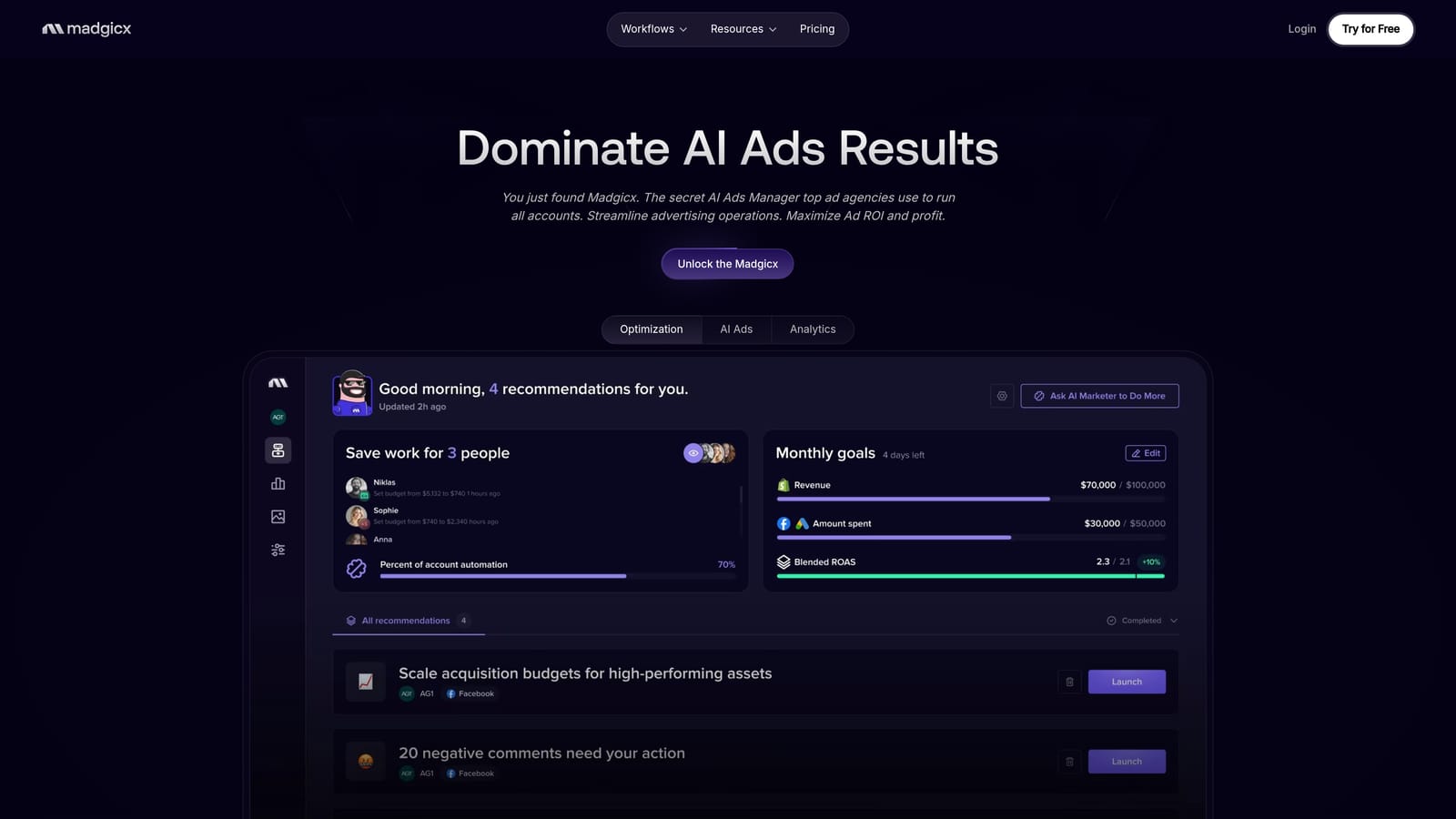
It stands out for Meta-specific optimization and creative insights. The platform looks at what your ads are doing and what creative is working, then points toward changes.
- AI optimization recommendations that suggest adjustments to live campaigns.
- Audience tools for building and refining targeting on Meta.
- Creative analysis showing which ads and visuals are driving results.
- Automation rules that act on conditions you define, such as pausing underperformers.
- Reporting dashboards for a basic view of performance.
It integrates with Meta Ads, Google Ads, and Shopify, but it is strongest on Meta. A Google-heavy agency or one with multi-channel accounts will find less value. Reporting is present but secondary, and there is no payment tracking. Day to day, it is run by the media buyer.
Pricing is tiered and scaled by ad spend, so costs rise as your clients spend more. Verify current tiers on the website as of October 2026.
Best for: Facebook and Instagram ad agencies prioritizing optimization over reporting.
9. Triple Whale
Triple Whale is an ecommerce analytics and attribution platform that connects ad platform data to store revenue. It answers a question ad platforms answer poorly: which spend actually led to Shopify sales.
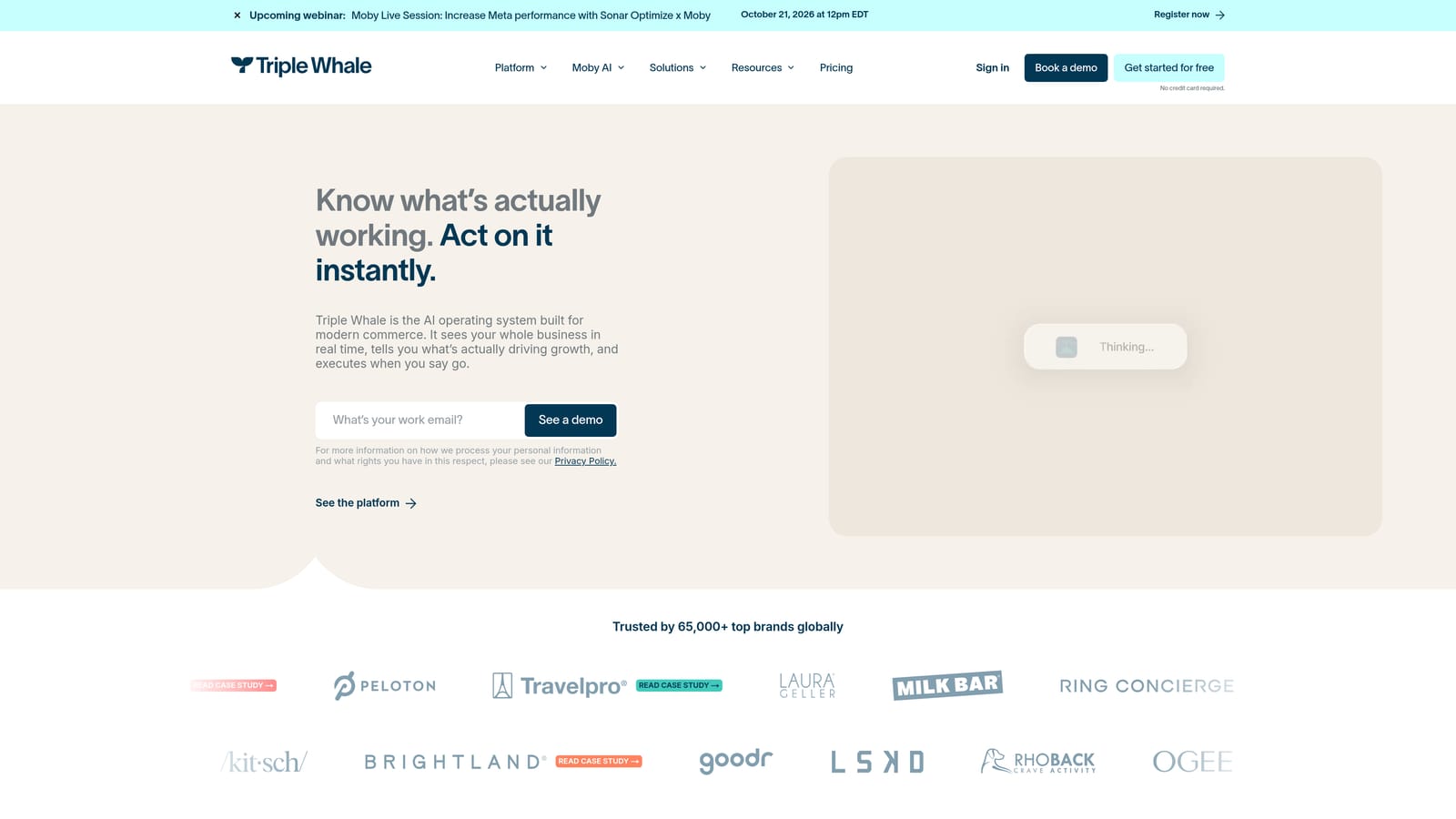
Its edge is store-level attribution, linking ad spend directly to revenue and profit rather than relying only on each platform's own reported conversions.
- First-party pixel attribution that tracks purchases from the store side.
- Shopify revenue dashboards that put sales and spend on one screen.
- Ad platform comparisons showing how Meta, Google, and TikTok stack up against each other.
- Profit and cohort metrics that go beyond return on ad spend.
- Creative reporting to see which ads drive purchases.
It integrates with Shopify, Meta Ads, Google Ads, Klaviyo, and TikTok Ads. The limitation is plain: it is built for ecommerce, so it is a poor fit for lead-gen or service clients. Setup involves installing the pixel on each store, and it is typically run by an ecommerce strategist or media buyer.
Pricing is tiered and tied to store size, so what you pay moves with each client's business. Check the website for current plans as of October 2026.
Best for: Agencies specializing in Shopify and DTC ecommerce brands.
Matching a Tool to the Way Your Agency Works
For all-in-one agency operations, ClientPlug is the strongest fit when you want ad tracking, payments, white-label reports, and Conversion API setup in one place for Meta and Google clients. If you only need reports, AgencyAnalytics suits full-service agencies, while Swydo suits PPC-focused ones and Looker Studio works for Google-heavy teams on a budget. For custom data pipelines, Supermetrics serves teams with analysts, and Funnel.io serves larger agencies with complex spend. Madgicx fits Meta-focused optimization, and Triple Whale fits ecommerce attribution.
Before committing, trial two tools with one real client account each. Watch for setup time, tracking accuracy, and what the client report looks like. Model per-client pricing against the roster you expect in a year, not the one you have today.