If you run an agency or manage ad accounts as a freelancer, you already know the daily juggle: client invoices in one spreadsheet, campaign performance scattered across Meta and Google dashboards, and reports assembled by hand the night before a client call. Most software built for this niche tries to solve one piece of that puzzle, usually reporting, while leaving payments and account health tracking as a separate manual chore. The tools below were chosen because they address at least one core part of running client accounts well, and evaluated on how thoroughly they consolidate data, automate the busywork, and hold up as your client roster grows.
Quick Comparison
- ClientPlug.io: best for agencies wanting payments, ad performance, and reporting in one dashboard; pricing on website; the only tool here that combines client payment tracking with ad performance monitoring.
- AgencyAnalytics: best for full-service agencies reporting across SEO and social alongside paid ads; pricing on website; broadest integration library on this list.
- Whatagraph: best for agencies wanting highly visual, customizable cross-channel reports; pricing on website; optional data warehouse export for custom BI work.
- DashThis: best for agencies wanting the fastest setup-to-report turnaround; pricing on website; flat pricing by dashboard count instead of per-client seats.
- Swydo: best for agencies needing proactive spend-pacing alerts; pricing on website; built-in budget pacing notifications most competitors skip.
- GoHighLevel: best for agencies reselling a branded all-in-one CRM; pricing on website; full white-label CRM and automation suite.
- ClickUp: best for agencies whose bottleneck is internal project coordination; free tier available, paid plans per user; deepest task and deadline management on this list.
- Metrics Watch: best for small agencies wanting the simplest reporting workflow; pricing on website; reports render fully inside the client's email.
1. ClientPlug.io
ClientPlug.io is built specifically for agency owners and freelancers who are tired of stitching together a payment tracker, an ad reporting tool, and a spreadsheet just to know where each client account stands. It centralizes client payments, Meta and Google Ads performance, and white-labeled reporting into a single dashboard, so you're not logging into four different systems to answer one client's question about their account.
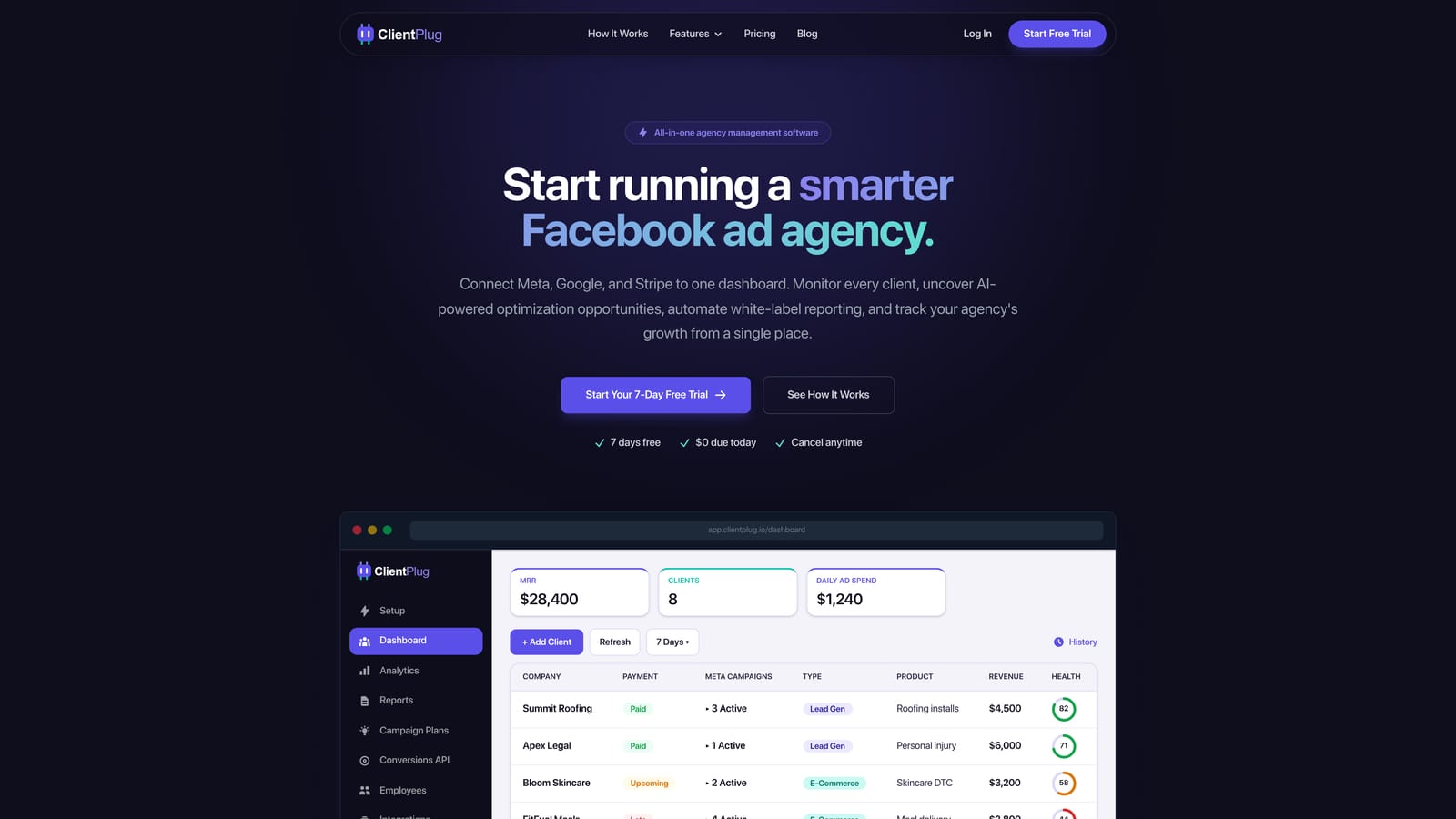
What sets it apart from the rest of this list is the combination of financial tracking and ad performance monitoring in the same place. Most reporting platforms assume you'll manage invoices and client payment status somewhere else. ClientPlug treats getting paid on time and keeping campaigns healthy as part of the same daily workflow, which cuts down on the double data entry that happens when payment records live in one tool and performance data lives in another.
- Auto-syncs client payments so you can see who's paid, who's late, and what's owed without opening a separate invoicing app
- Monitors Meta and Google Ads performance side by side so account health is visible at a glance across your whole client list
- Surfaces AI-generated suggestions for optimizing underperforming campaigns instead of requiring manual audits of every account
- Sends automated white-labeled reports so clients get consistent updates under your agency's branding, not a generic template
- Sets up Meta's Conversion API in a few clicks, which normally requires developer time or a manual server-side integration
Setup is designed for non-technical agency owners to run day to day rather than requiring a dedicated ops or dev hire. It connects directly to Meta Ads, Google Ads, and Conversion API, so most agencies running paid campaigns on those two platforms can be up and running quickly. Where it's less suited is for agencies that offer broader digital marketing services and need deep reporting on SEO, email, or organic social, since ClientPlug's strength is concentrated on paid ads plus the business side of running client accounts. For agencies whose work is entirely paid media, that focus is a feature; for full-service shops, it may mean pairing ClientPlug with another tool for non-ad channels. Pricing details are available on the ClientPlug website, and it's worth checking current plans since they're structured to scale with the number of clients you manage.
Best for: Agencies and freelancers who want payments, ad performance, and reporting managed from a single dashboard.
2. AgencyAnalytics
AgencyAnalytics is a marketing reporting platform aimed at agencies that manage more than paid ads, think SEO, social, and email alongside PPC campaigns. It's built for teams that need one reporting layer sitting on top of a wide range of marketing channels rather than just Meta and Google.
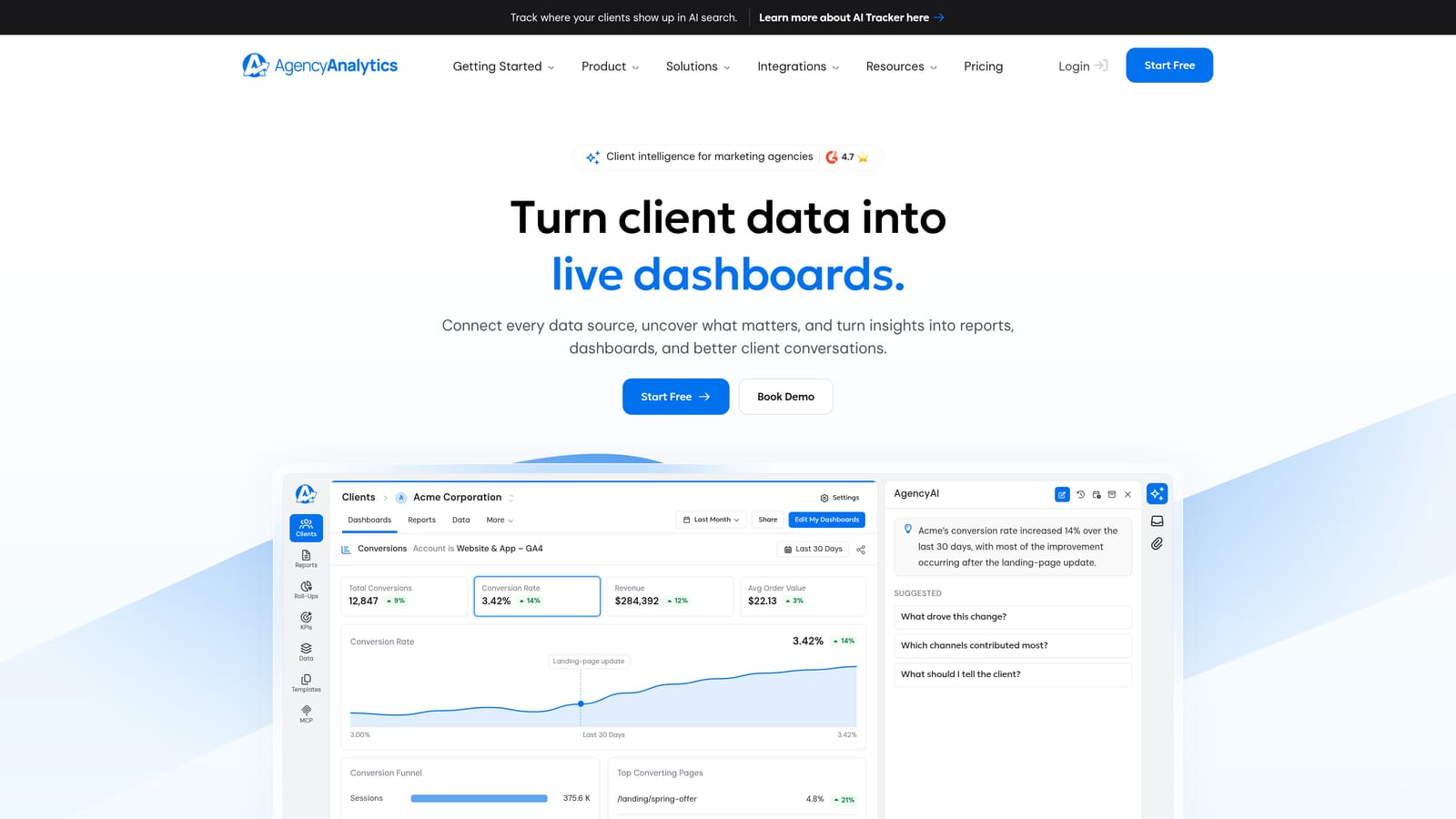
Its distinguishing strength on this list is sheer integration breadth. With more than 80 native integrations, it can pull data from rank trackers, call tracking tools, email platforms, and social channels into the same client dashboard, which matters a great deal if your agency sells more than ad management.
- Connects to over 80 marketing tools so you're not stuck building custom exports for niche platforms your clients use
- Builds white-label dashboards clients can log into anytime, reducing the number of "how's my campaign doing" emails
- Automates scheduled report delivery so recurring updates go out without you remembering to hit send
- Tracks custom KPIs specific to each client's goals instead of forcing every account into the same template
- Includes rank tracking for SEO clients, which is useful if organic search is part of your service mix
Setup involves connecting each client's accounts individually, and larger agencies may want someone dedicated to maintaining dashboard templates as the client list grows. The tool is squarely aimed at reporting and doesn't include any client payment or invoicing functionality, so agencies choosing it still need a separate system to track who owes what. Pricing scales with the number of client campaigns you're running, and it's worth checking current tiers directly on the site since thresholds shift.
Best for: Full-service agencies reporting on SEO and social alongside paid ads.
3. Whatagraph
Whatagraph is a cross-channel reporting tool built around a visual, drag-and-drop report builder. It targets agencies that care as much about how a report looks as what data it contains, and want flexibility in blending numbers from different platforms into one narrative.
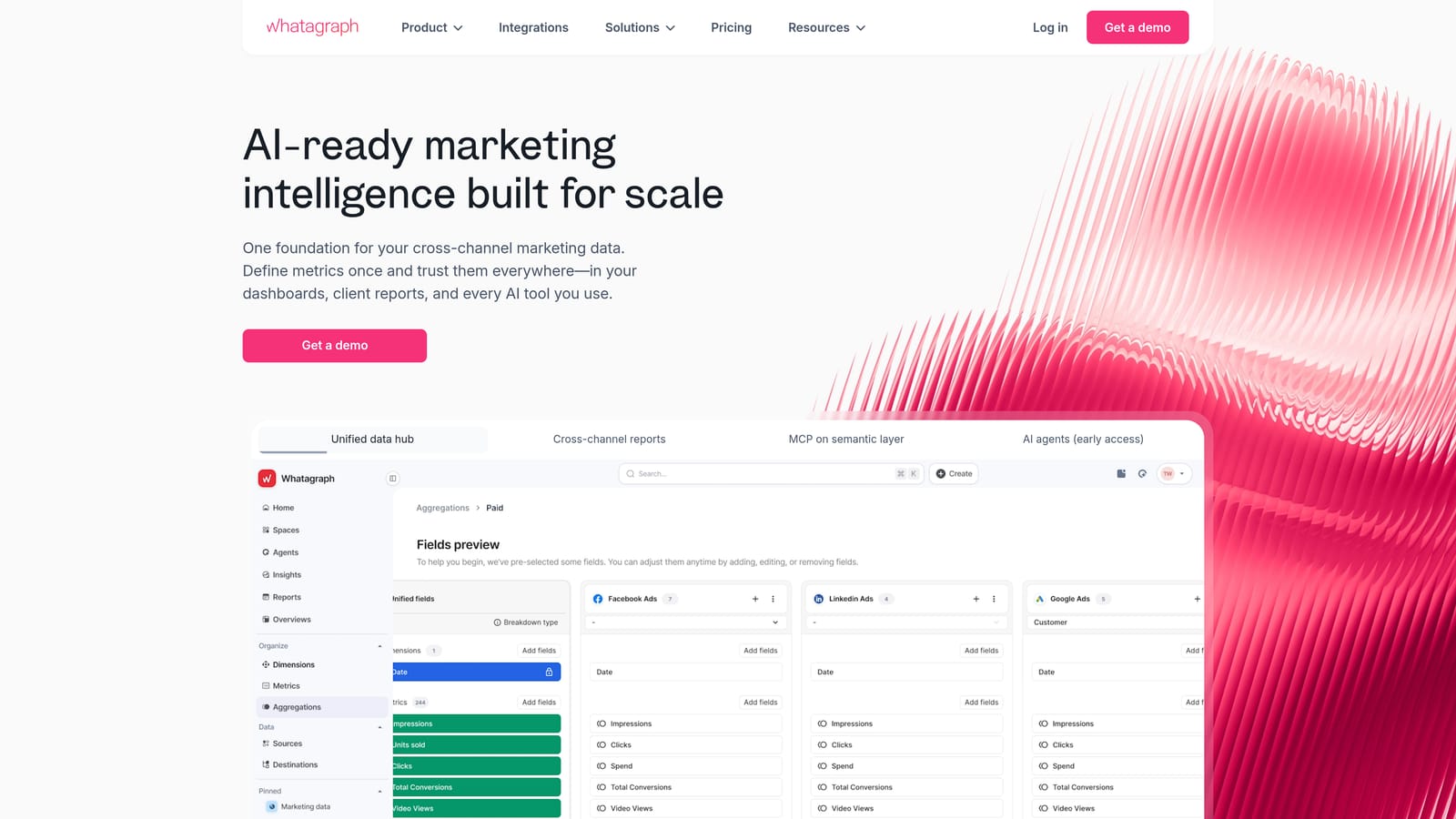
The feature that separates it from other reporting tools here is its optional data warehouse add-on, which exports raw campaign data for agencies that want to run their own custom analysis in a BI tool rather than relying solely on Whatagraph's built-in visuals.
- Lets you build reports visually with drag-and-drop widgets instead of working from rigid templates
- Blends data across channels like paid social, search, and analytics into a single unified view per client
- Automates report delivery on a schedule so clients receive consistent updates without manual exports
- Offers a data warehouse option for agencies wanting raw data access beyond the standard dashboard
- Gives clients their own access portal so they can check performance without waiting on you
Whatagraph is generally run by whoever owns client reporting at the agency, often the account manager or owner directly, and setup time depends on how many data sources you're connecting per client. The tradeoff to watch is cost: pricing tiers are based on the number of data sources connected, and that figure climbs quickly as you add clients and channels, so agencies with many small accounts may find it pricier than expected at scale. It has no client payment tracking built in, so it solves reporting only.
Best for: Agencies wanting highly visual, customizable cross-channel reports.
4. DashThis
Speed is the whole pitch behind DashThis. It's a reporting tool built around pre-built dashboard templates for common ad platforms, aimed at agencies that want a finished, presentable client report without spending hours configuring it from scratch.
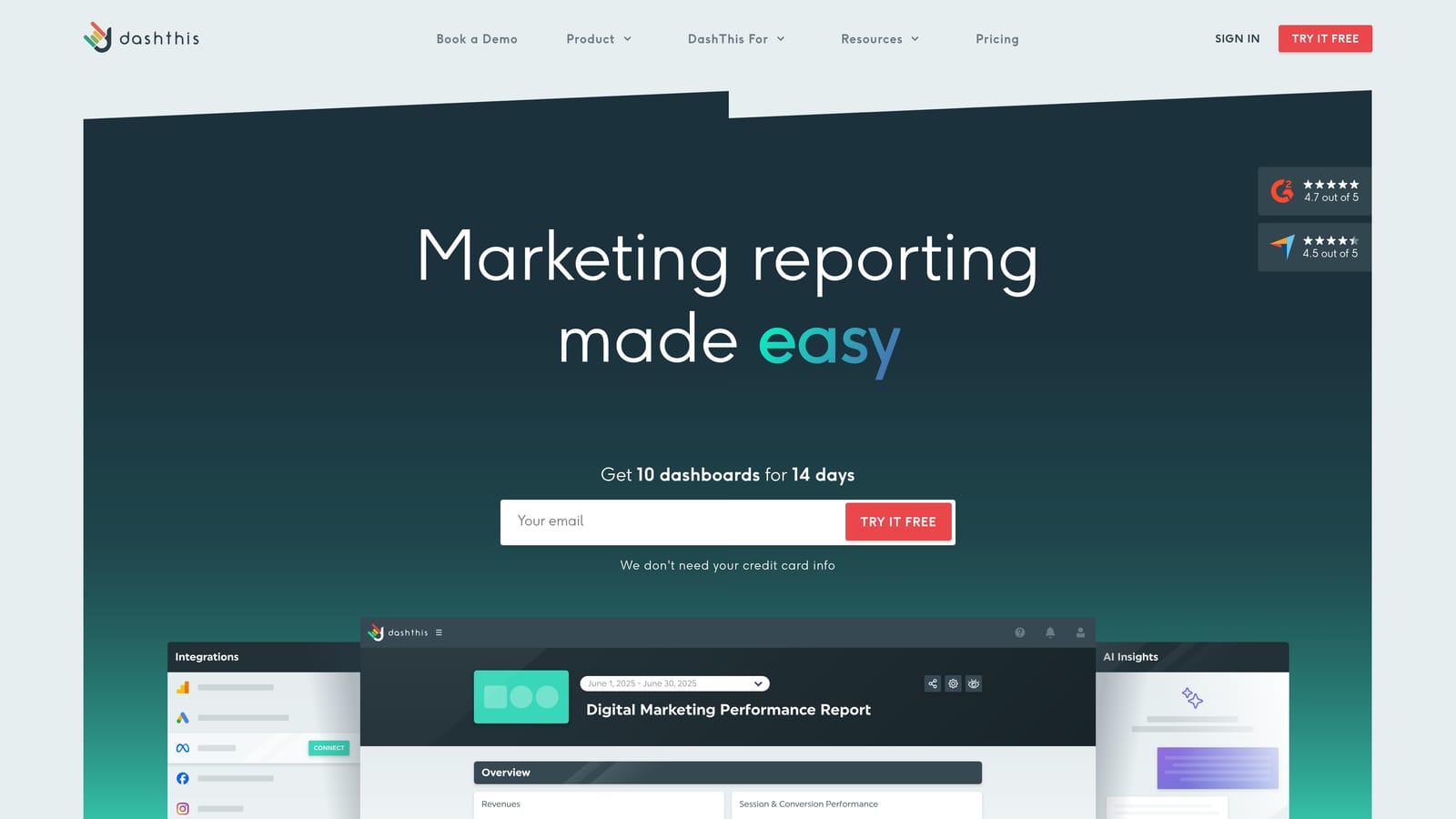
Where DashThis stands out on this list is its pricing structure: it charges by dashboard count rather than per client seat or data volume, which makes budgeting simpler for agencies juggling many small accounts where per-seat pricing would add up fast.
- Starts you off with pre-built templates for the most common ad and analytics platforms, cutting setup time significantly
- Uses drag-and-drop widgets so you can adjust a template without needing design skills
- Automates report scheduling so recurring client updates go out on autopilot
- Pulls data from multiple platforms into one dashboard view per client
It's a tool most agency owners or account managers can run without technical help, since the templates do most of the setup work. That simplicity comes with a tradeoff: DashThis has no client payment tracking, CRM, or task management features, so it's purely a reporting layer and nothing more. Agencies that need to manage invoicing or project deadlines will need separate software alongside it. Pricing is a flat monthly fee tied to how many dashboards you maintain, and current tiers are listed on the DashThis site.
Best for: Agencies wanting the fastest path from signup to a finished client report.
5. Swydo
Swydo is an ad reporting platform aimed at agencies managing paid media budgets across multiple platforms who want to catch spend problems before they become client complaints. Its core audience is agencies running Google, Meta, and Microsoft Ads simultaneously for several clients.
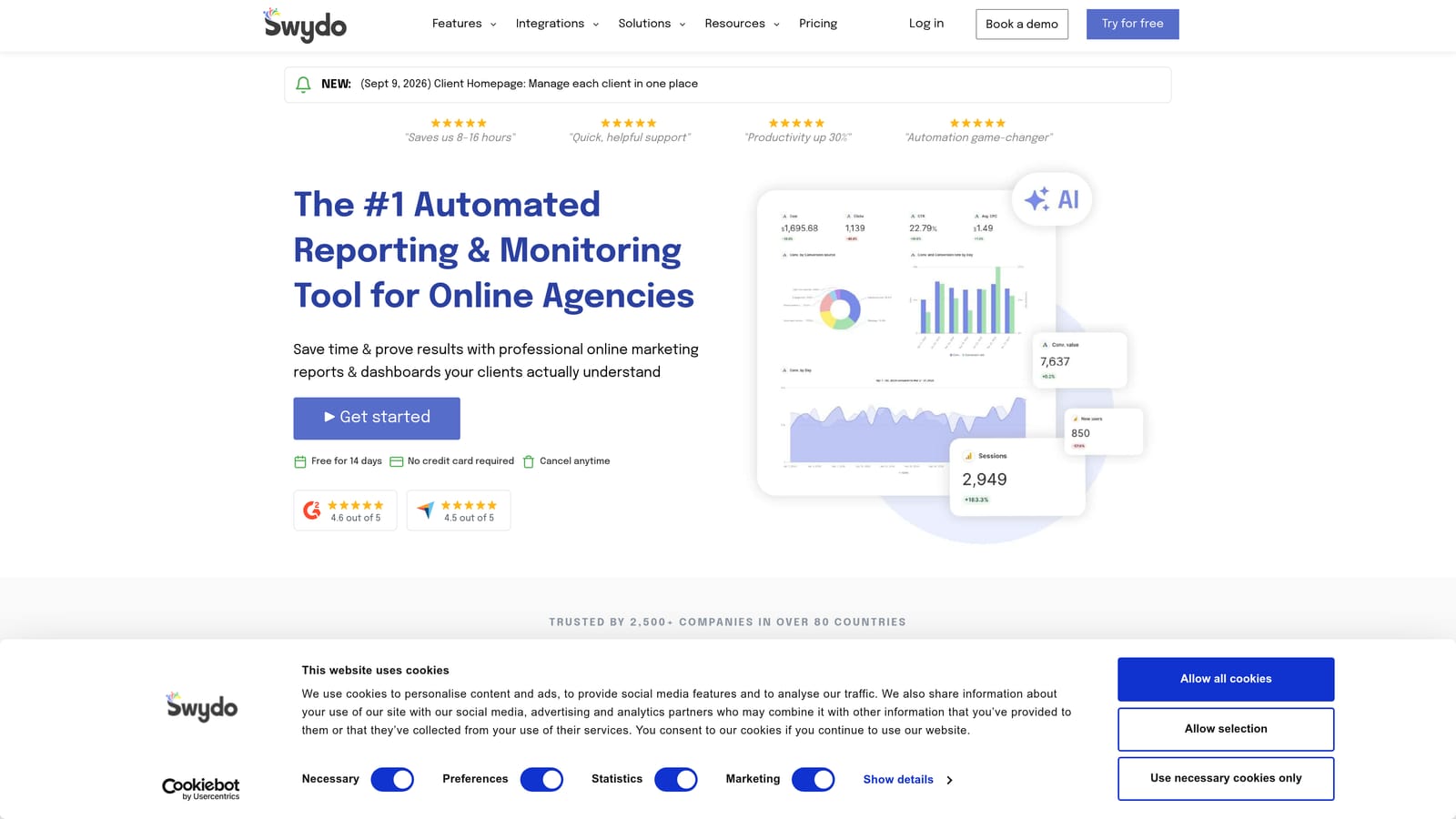
Budget pacing is where Swydo earns its place on this list. It flags accounts that are tracking over or under their monthly spend targets, a feature most reporting-focused competitors don't build in, which means fewer surprises at month-end when a client asks why their budget ran out early or barely got spent.
- Sends budget pacing alerts so you catch overspend or underspend issues mid-month instead of after the invoice lands
- Connects natively to Google, Meta, and Microsoft Ads without relying on third-party connectors
- Provides white-label report templates so client-facing documents carry your agency's branding
- Tracks goals against each client's targets so performance conversations are grounded in numbers set upfront
Account managers typically run Swydo day to day, checking pacing alerts and adjusting spend recommendations accordingly. The interface and report design options are noticeably dated compared to newer entrants like Whatagraph or DashThis, which is a fair tradeoff to weigh if visual polish matters to your client base. Pricing is tiered by number of clients managed, with current details on Swydo's site.
Best for: Agencies that need proactive spend-pacing alerts across multiple ad platforms.
6. GoHighLevel
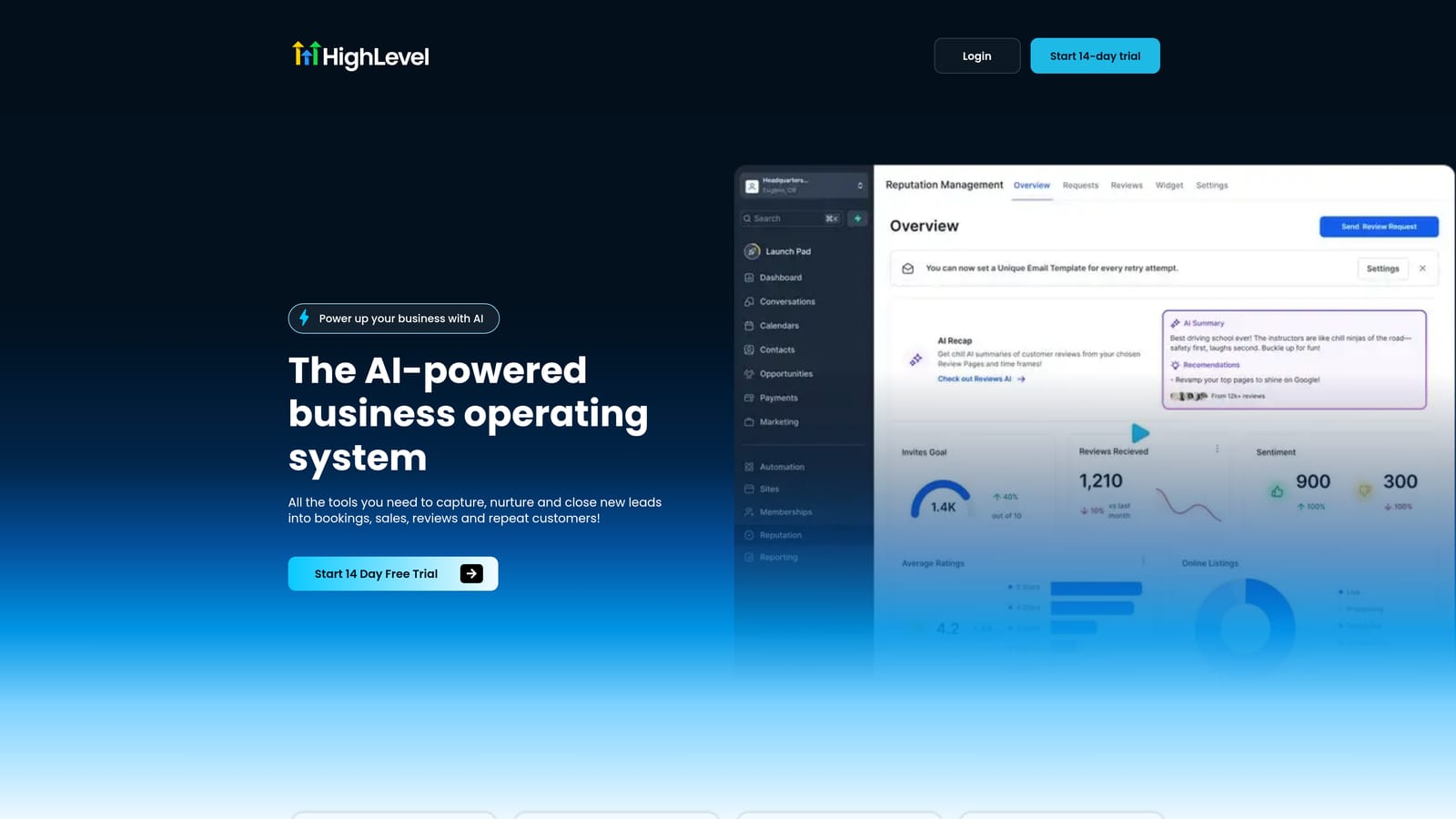
GoHighLevel takes a different approach from the reporting tools on this list. It's an all-in-one CRM and white-label platform combining sales funnels, pipelines, and client portals, and it's especially popular with agencies that resell software to local businesses rather than only managing their ad accounts.
What it does that others don't
GoHighLevel's standout feature is that agencies can fully white-label the platform and resell it as their own branded software to clients, turning it into a revenue stream on top of ad management services. No other tool on this list offers that reseller model.
- Gives you a white-label CRM you can rebrand and resell as your own product to clients
- Automates client onboarding and invoicing workflows so new accounts get set up consistently
- Includes a funnel and landing page builder for agencies running lead gen alongside ad management
- Runs SMS and email automation pipelines for nurturing client leads or communicating with existing clients
Tradeoffs to weigh
The learning curve is steeper than a purpose-built reporting tool, since you're essentially learning a full CRM and automation platform, not just connecting ad accounts. Native ad performance reporting is shallower than what dedicated tools offer, so agencies focused primarily on campaign performance reporting may find themselves relying on Zapier integrations to pull in Google and Meta Ads data. It connects to Stripe for payments and Twilio for communications, with ad platform data flowing through Zapier rather than native connections. Pricing runs as a monthly subscription with an optional white-label reseller tier, detailed on GoHighLevel's site.
Best for: Agencies wanting to resell a branded all-in-one CRM alongside their ad services.
7. ClickUp
ClickUp isn't built for ad reporting at all. It's a project and task management platform, and agencies use it to organize client deliverables, deadlines, and internal team workflows rather than campaign data.
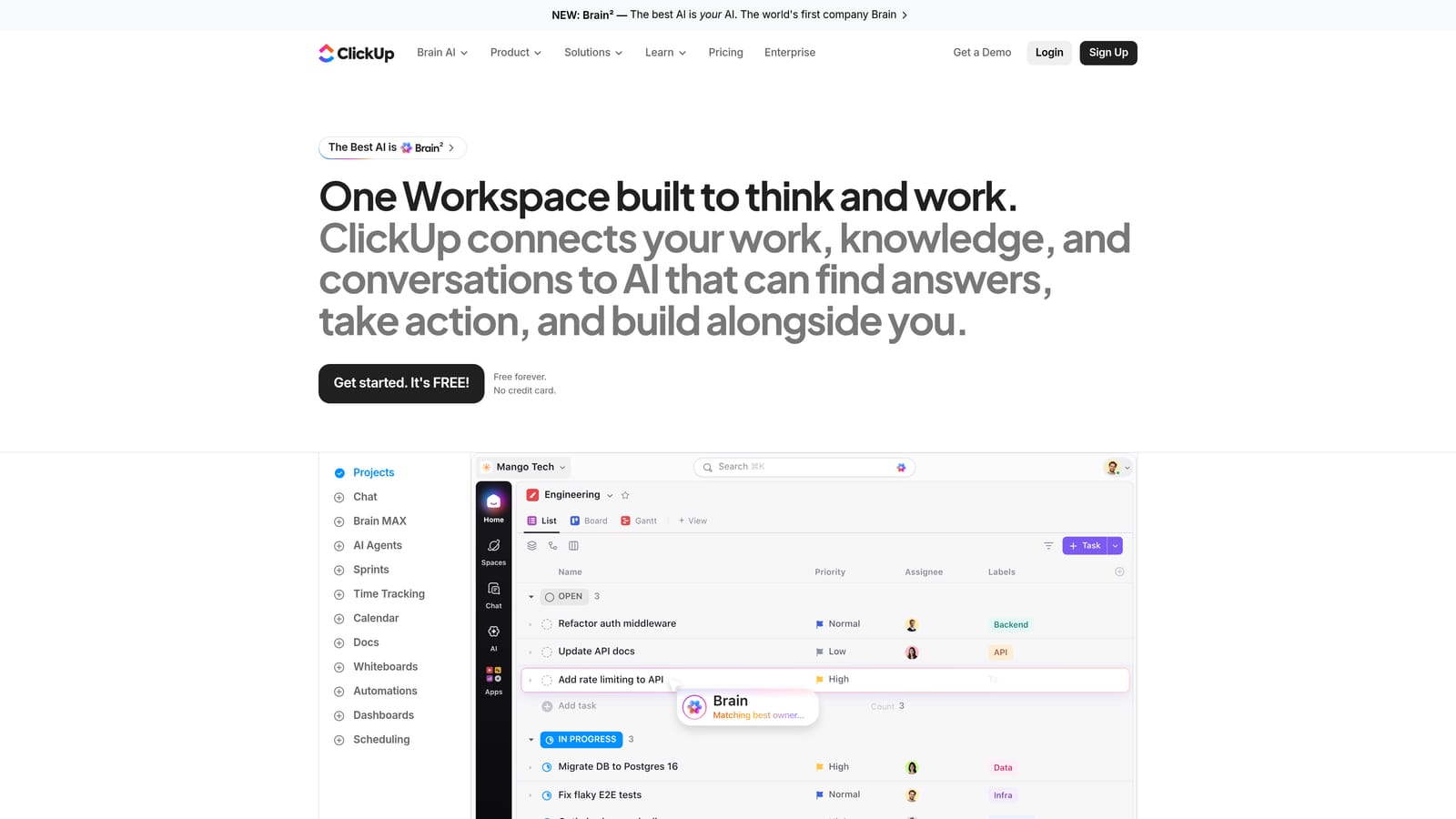
Its limitation up front matters: ClickUp has no native ad performance or payment tracking, and pulling in campaign data requires integrations through Zapier or similar tools. If your main pain point is reporting or invoicing, this isn't the tool to solve it. But if your agency's real bottleneck is internal coordination, missed deadlines, or unclear ownership of client tasks, ClickUp addresses that directly and does it better than any other tool on this list.
- Organizes each client into a dedicated space or folder so deliverables and files don't get mixed across accounts
- Automates repetitive task workflows so recurring client work doesn't require manual setup each time
- Tracks time spent per task or client, useful for agencies billing hourly or auditing team capacity
- Builds custom dashboards so managers can see project status across the whole client roster at once
It's typically run by whoever manages operations or project delivery at the agency, and setup effort depends on how much you customize spaces, statuses, and automations. A free tier exists for small teams testing it out, with paid plans priced per user per month for larger teams, detailed on ClickUp's site. It integrates with Zapier, Google Drive, and Slack, which covers most agency workflows but still leaves ad performance data as a manual pull unless you build the connection yourself.
Best for: Agencies whose main bottleneck is internal project coordination rather than ad reporting.
8. Metrics Watch
Metrics Watch is built for one thing: getting a performance report in front of a client with as little friction as possible. It's aimed at small agencies and freelancers who find dashboard-based reporting tools like AgencyAnalytics or Whatagraph more than they need.
The feature that sets it apart is that reports render fully inside the client's email itself, rather than linking out to a dashboard the client has to log into. That removes a step in the client experience and tends to increase how many clients actually look at their reports each month.
- Delivers reports embedded directly in email so clients don't need a login or extra click
- Automates report scheduling so recurring updates go out without manual work each month
- Offers a simple drag-and-drop editor for building report layouts without a learning curve
- Pulls data from multiple ad and analytics platforms into one report
It connects to Google Ads, Meta Ads, and Google Analytics, covering the core channels most small agencies need. Setup is minimal, and a solo freelancer or small team can run it without dedicating anyone specifically to reporting. The limitation is that it stops at reporting: there's no payment tracking, CRM, or campaign optimization functionality, so agencies with more complex operational needs will outgrow it quickly. Pricing runs in monthly plans based on number of clients, listed on the Metrics Watch site.
Best for: Small agencies and freelancers who want the simplest possible client reporting workflow.
Matching the Tool to Your Agency's Bottleneck
If your biggest headache is chasing invoices in one app while checking campaign performance in another, ClientPlug is built to close that gap by keeping payments, ad performance, and reporting in a single dashboard. If your agency reports across SEO, social, and email in addition to paid ads, AgencyAnalytics or Whatagraph give you the channel depth and integration breadth to back that up. For agencies that just need a fast, low-cost way to get a report in front of a client, DashThis and Metrics Watch trim the process down to the essentials.
Swydo is worth a serious look if budget pacing alerts across Google, Meta, and Microsoft Ads would save you from month-end surprises. GoHighLevel makes sense for agencies building a software resale business on top of their ad services and needing full CRM functionality to support it. And if the real constraint is internal coordination rather than reporting or payments, ClickUp addresses that more directly than any reporting tool ever will.
No single tool here does everything, which is exactly why it's worth being honest about which bottleneck is costing you the most time each month before you commit. If centralizing client payments alongside ad performance and reporting sounds like the gap you've been patching with spreadsheets, Learn more about our services.