Running Facebook ads for clients means two jobs that most software treats separately: winning new accounts, and keeping existing ones by showing results and getting paid on time. This guide is for agency owners and freelancers choosing software for either job, or both. The tools were compared on pipeline handling, client onboarding, Meta Ads data, reporting, automation, and cost for small to mid-size teams. ClientPlug is our own product, so we flag where it fits and where it does not.
Quick Comparison of the Tools
- ClientPlug: agencies managing many Meta and Google Ads clients; pricing on the website; syncs client payments and ad performance into one agency-wide health view.
- HubSpot CRM: agencies building an inbound sales and marketing engine; free tier available; the largest ecosystem pairing a free CRM with full marketing automation.
- Pipedrive: small agency sales teams; pricing on the website; the cleanest next-action deal pipeline.
- Zoho CRM: budget-conscious agencies, especially those already on Zoho; free tier available; the deepest customization at a low per-seat price.
- monday CRM: agencies wanting deals and client projects together; pricing on the website; sales pipeline and delivery projects in one workspace.
- GoHighLevel: lead-gen agencies automating follow-up and reselling services; pricing on the website; CRM plus funnels and reseller-style white-labeling.
- Close: small sales teams closing retainers by phone and SMS; pricing on the website; a native dialer and multichannel outreach inside the CRM.
- Copper: relationship-driven agencies living in Google Workspace; pricing on the website; the deepest Gmail and Workspace embedding.
- Agile CRM: solo freelancers on a minimal budget; pricing on the website, so check whether a free plan exists; the lowest-cost bundle of CRM and email marketing.
1. ClientPlug
ClientPlug is an all-in-one client organizer for digital marketing agencies and freelancers. It is designed for the delivery side of the business: once a client signs, it keeps their payments, Meta and Google Ads performance, and reporting in a single dashboard.
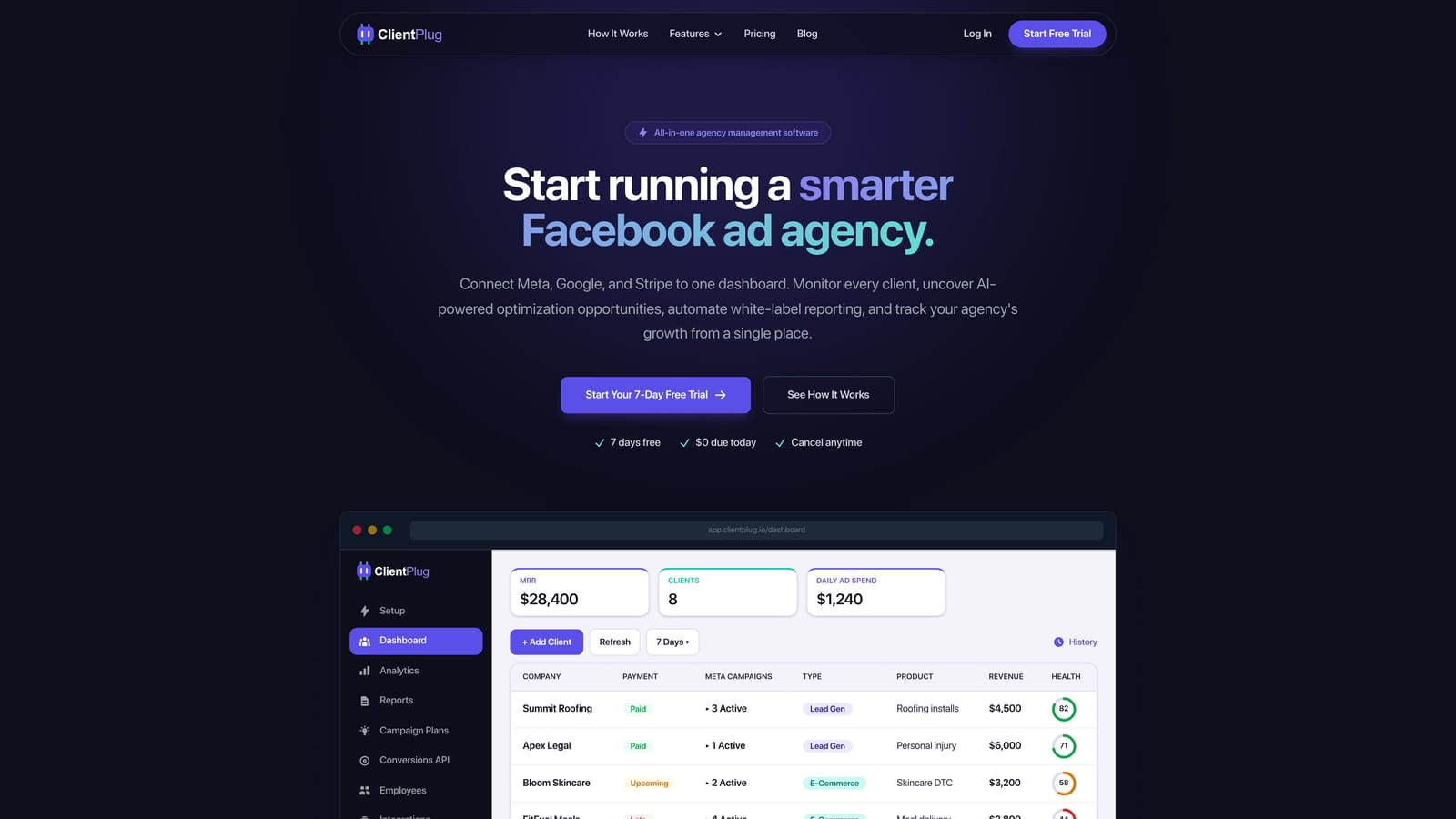
What sets it apart on this list is that payments and campaign data sync automatically, so you can see the health of an individual ad, a campaign, a client, or the whole agency without opening five tabs. Most CRMs below stop at the deal being won. ClientPlug starts there.
- Client payment tracking shows who has paid, who is late, and what is outstanding without a separate spreadsheet.
- Meta and Google Ads performance monitoring puts results for every client account in one view.
- Automated white-label reports go to clients under your branding, which cuts the monthly reporting scramble.
- Conversion API setup takes a few clicks, so server-side event sharing with Meta does not require a developer.
- AI campaign optimization suggests improvements so you spot underperforming ads sooner.
Its integrations center on Meta Ads and Google Ads, which is the point: it is built around ad accounts rather than a broad app marketplace. Setup means connecting ad accounts and client records, and it is typically run by the agency owner or an account manager.
The honest limitation: ClientPlug is not an outbound sales-sequencing CRM. If you prospect at high volume with call cadences and multi-step email sequences, you will want a second tool for that. Pricing is listed on the website, so check current plans there.
Best for: Agencies managing many Meta and Google Ads clients who want billing, reporting and performance in one place.
2. HubSpot CRM
HubSpot CRM is one of the most widely used CRMs, pairing a free tier with deal pipelines and a paid marketing and sales suite. It suits agencies that want to build a scalable inbound engine and grow into automation over time.
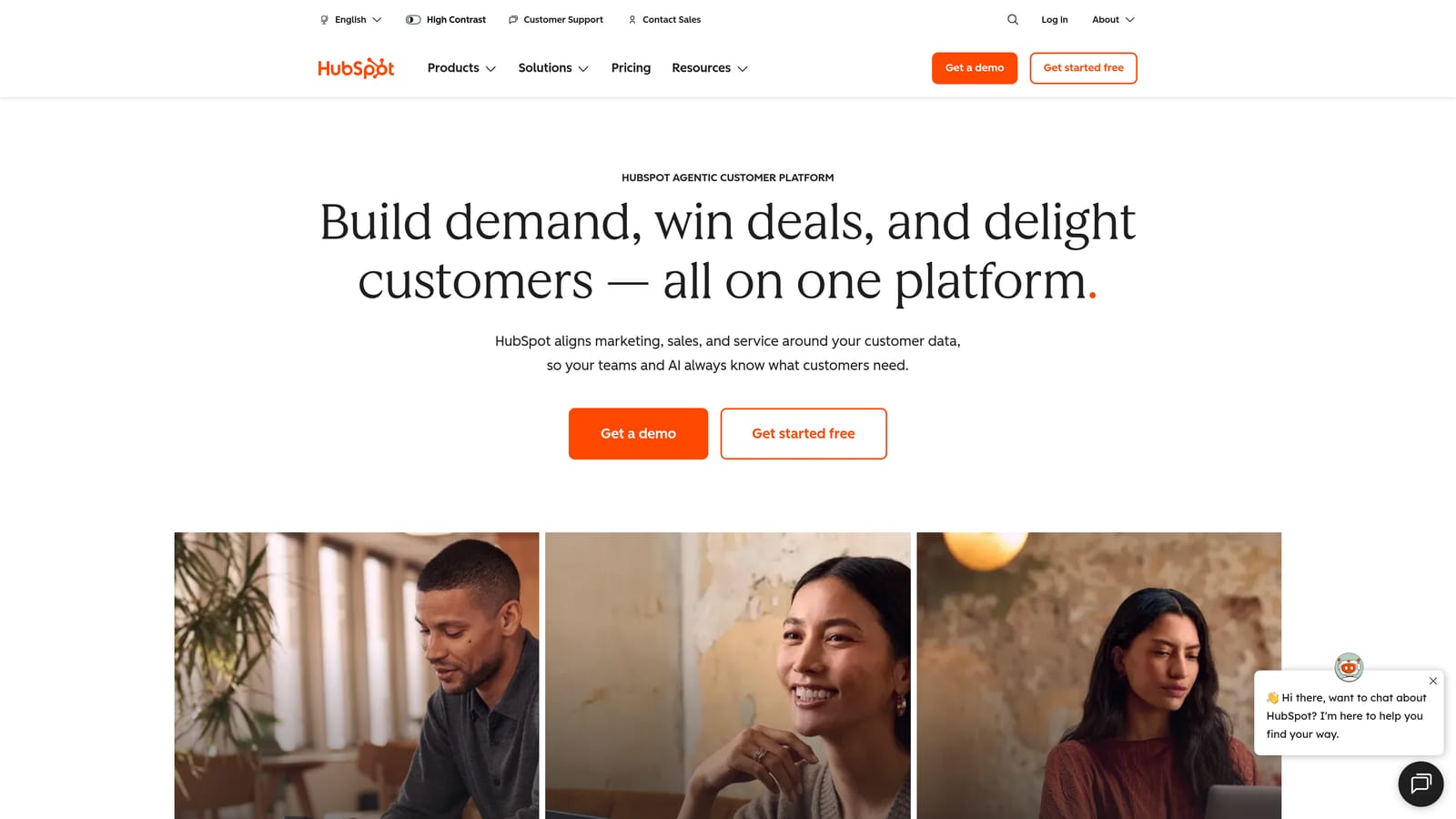
Its distinctive strength is the ecosystem. No other tool here combines a free CRM with marketing automation, email, forms and reporting at HubSpot's scale, and the integration library is large.
- The free CRM tier lets a new agency track contacts and deals at no cost.
- Deal pipelines show where each prospect sits so nothing stalls unnoticed.
- Email tracking tells you when a proposal was opened, which helps timing follow-ups.
- Facebook Lead Ads sync pulls leads from your own lead forms into the CRM.
- Marketing and Sales Hub automation handles nurture sequences and routing as you grow.
It connects with Facebook Lead Ads, Gmail, Outlook, Slack and Zapier. Basic setup is quick, but using the paid hubs well takes real configuration, often owned by a sales or operations lead.
The limitations are cost and scope. Prices climb quickly as you add seats and hubs, and HubSpot has no ad performance tracking or client payment tracking for agency delivery. Verify current plan pricing as of October 2026 on the website. The free tier works for a small team but does not carry a growing one for long.
Best for: Agencies building a scalable inbound sales and marketing engine.
3. Pipedrive
Pipedrive is a visual sales-pipeline CRM known for simplicity. Its interface is built around the next action on each deal, which makes it easy for a small team to adopt without training.
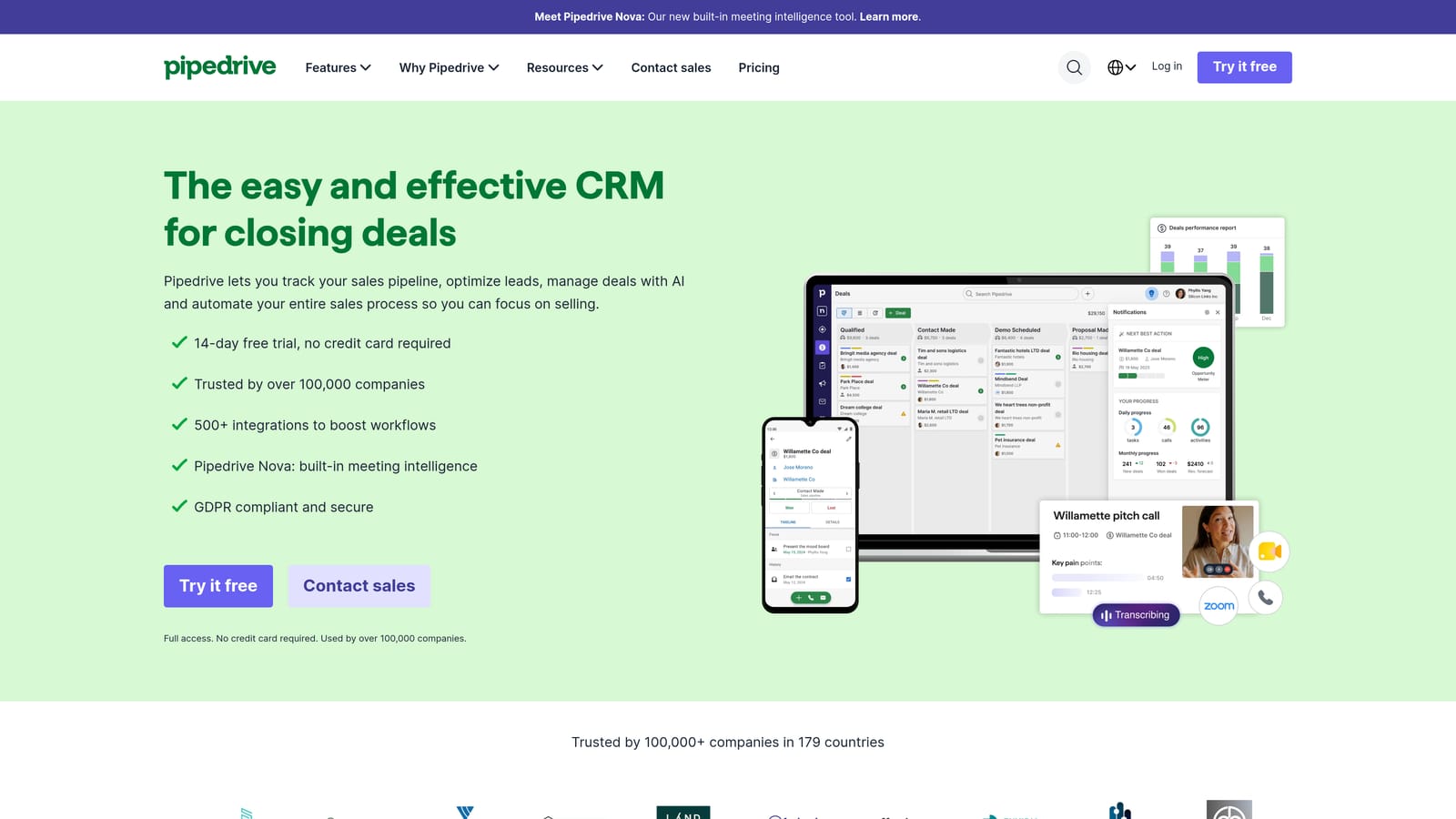
Compared with the rest of the list, its pipeline view is the cleanest. Reps know what to do next, and reminders keep follow-ups from slipping.
- A drag-and-drop pipeline lets you move prospects through stages in seconds.
- Workflow automations handle repetitive steps like task creation after a stage change.
- Email sync keeps conversations attached to the right deal.
- Web forms capture inquiries from your site directly into the pipeline.
- Activity reminders prompt calls and follow-ups so deals do not go cold.
It integrates with Zapier, Google Workspace, Microsoft 365 and Slack. A Facebook Lead Ads connection is available, but verify whether it is native or runs through a connector before you commit. Setup is light, and a salesperson or founder can run it alone.
It is a sales tool only. There is no client delivery, billing or ad reporting, so you will need something else once the deal closes. Pricing is per user per month in tiers; check the website for current rates.
Best for: Small agency sales teams wanting a fast, simple pipeline.
4. Zoho CRM
Zoho CRM is a customizable, budget-friendly CRM that sits inside the broader Zoho app suite. It is aimed at teams that want control over their data model without enterprise pricing.
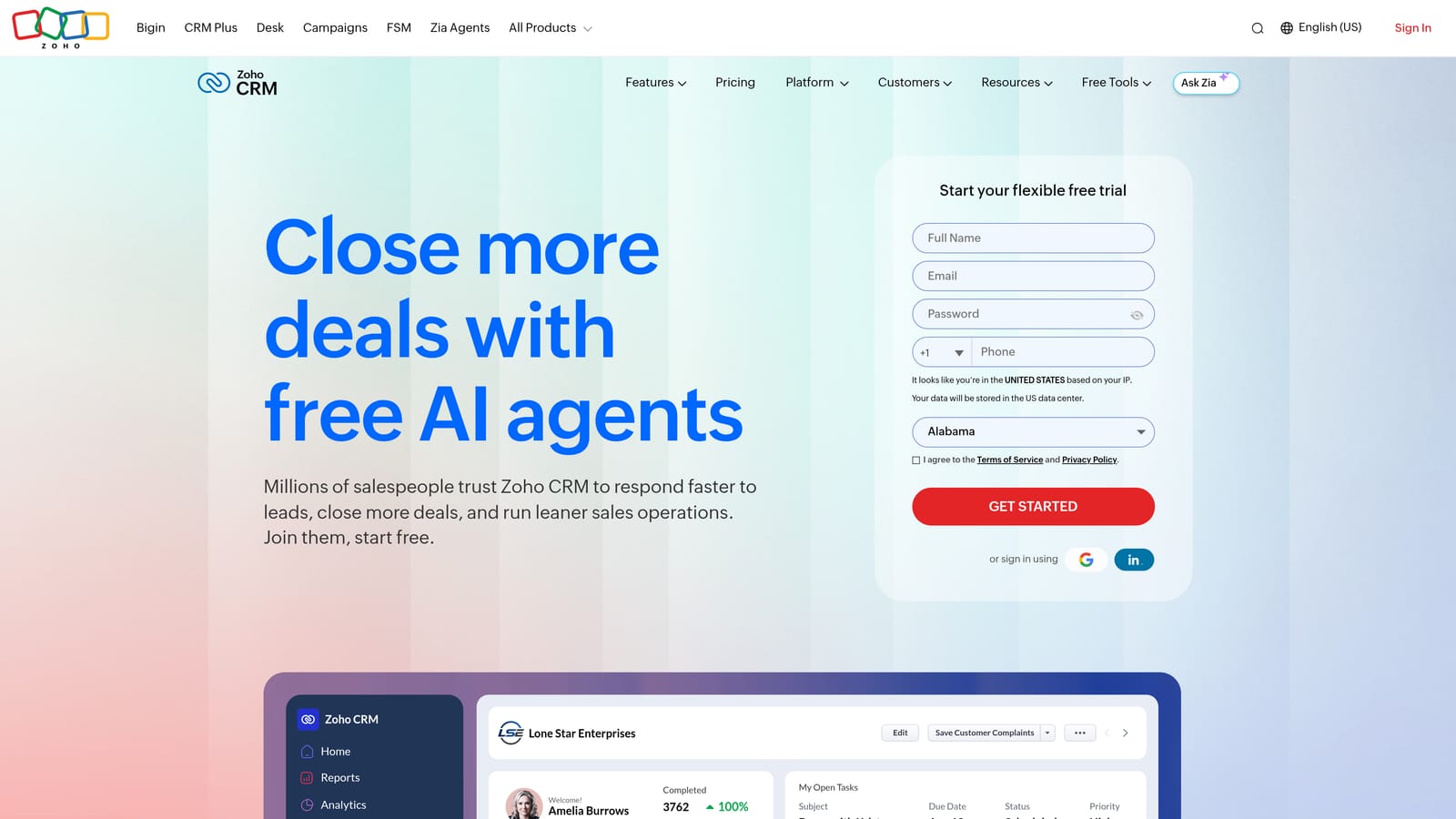
Its edge is customization at a low per-seat price. You can build custom modules and fields to mirror how your agency actually works, for instance tracking ad spend tiers or onboarding stages on a client record.
- A free tier for small teams lets you start without a budget line.
- Custom modules and fields let you store agency-specific data beyond standard deals and contacts.
- The Zia AI assistant offers predictions and suggestions, depending on your plan.
- Workflow automation reduces manual follow-up and record updates.
- Social lead capture brings in leads from channels including Facebook.
Integrations include the Zoho suite, a Facebook Lead integration, Google Workspace and Zapier. If you already use Zoho Books or Zoho Projects, the fit improves considerably.
The trade-off is complexity. The interface is dense, and setup takes longer for non-technical users, so someone should own configuration. It also has no native Meta Ads performance reporting. Pricing combines a free tier with per-user paid plans; check current figures on the website.
Best for: Budget-conscious agencies already using Zoho apps.
5. monday CRM
monday CRM is built on monday.com's work management platform, so your sales pipeline lives on customizable boards rather than a rigid CRM structure.
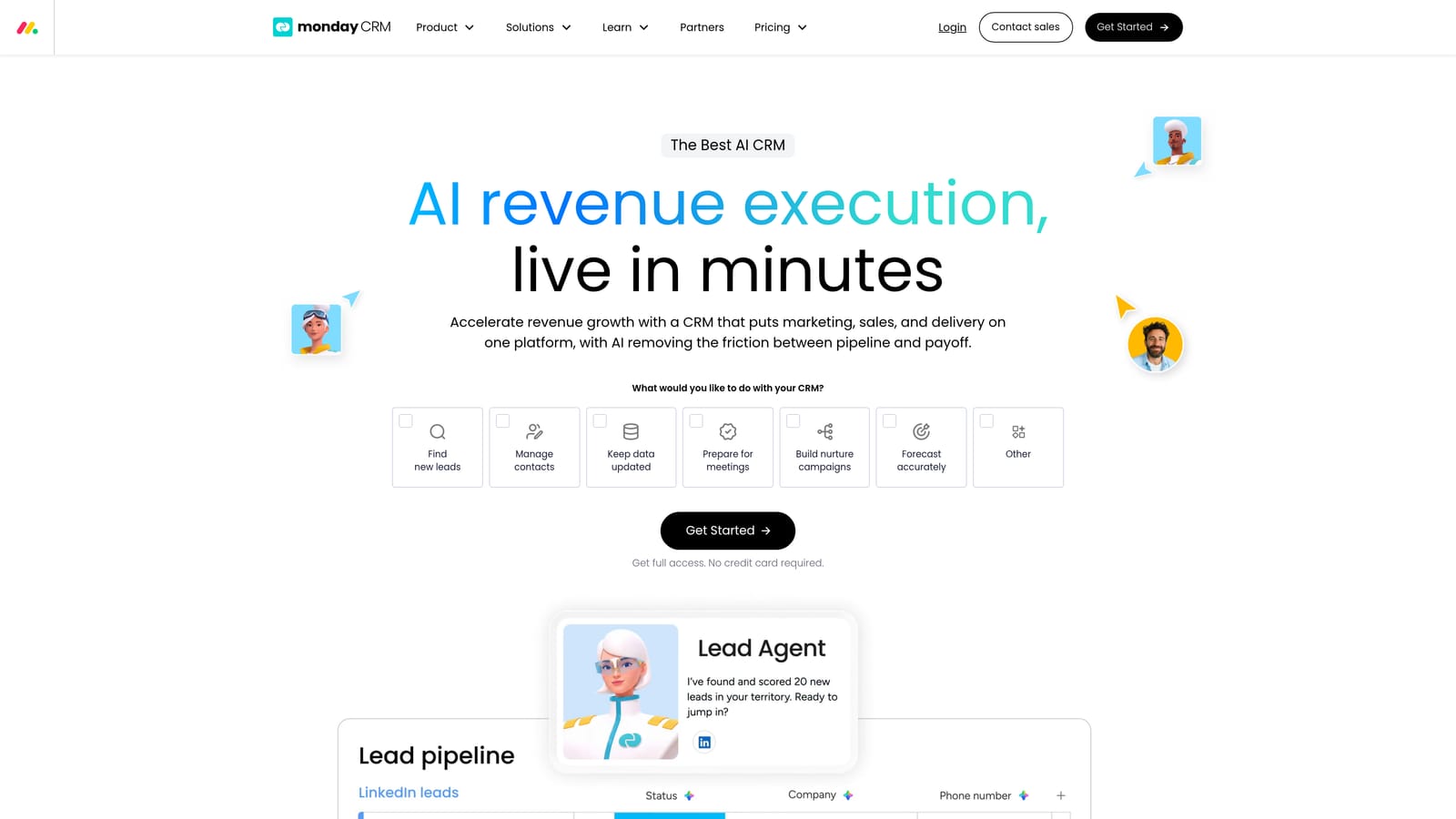
The distinctive benefit is that sales and client delivery share one workspace. When a deal closes, a handoff board can spin up the onboarding project for the same client without exporting anything to another tool.
- Customizable boards adapt to your own sales stages and fields.
- Automations move items, assign owners and send notifications as deals progress.
- Pipeline and contact management covers the core CRM basics.
- Dashboards give owners a live view of pipeline value and team workload.
- Project handoff boards carry a won deal into campaign setup and delivery tasks.
It connects with Gmail, Outlook, Slack and Zapier, and a Facebook Lead Ads option should be verified as native or via connector. Setup is approachable if you already know monday.com, and an operations manager usually runs it.
Limitations: seat minimums can raise the cost for tiny teams, and there is no native ad analytics, so proof of results still lives elsewhere. Pricing is per seat per month with those minimums; confirm the current structure as of October 2026.
Best for: Agencies wanting deals and client project workflows together.
6. GoHighLevel
GoHighLevel is an agency-focused platform that blends a CRM with funnels, websites, SMS and email automation. It is built for lead-gen agencies that run campaigns and follow-up for clients, not only for themselves.
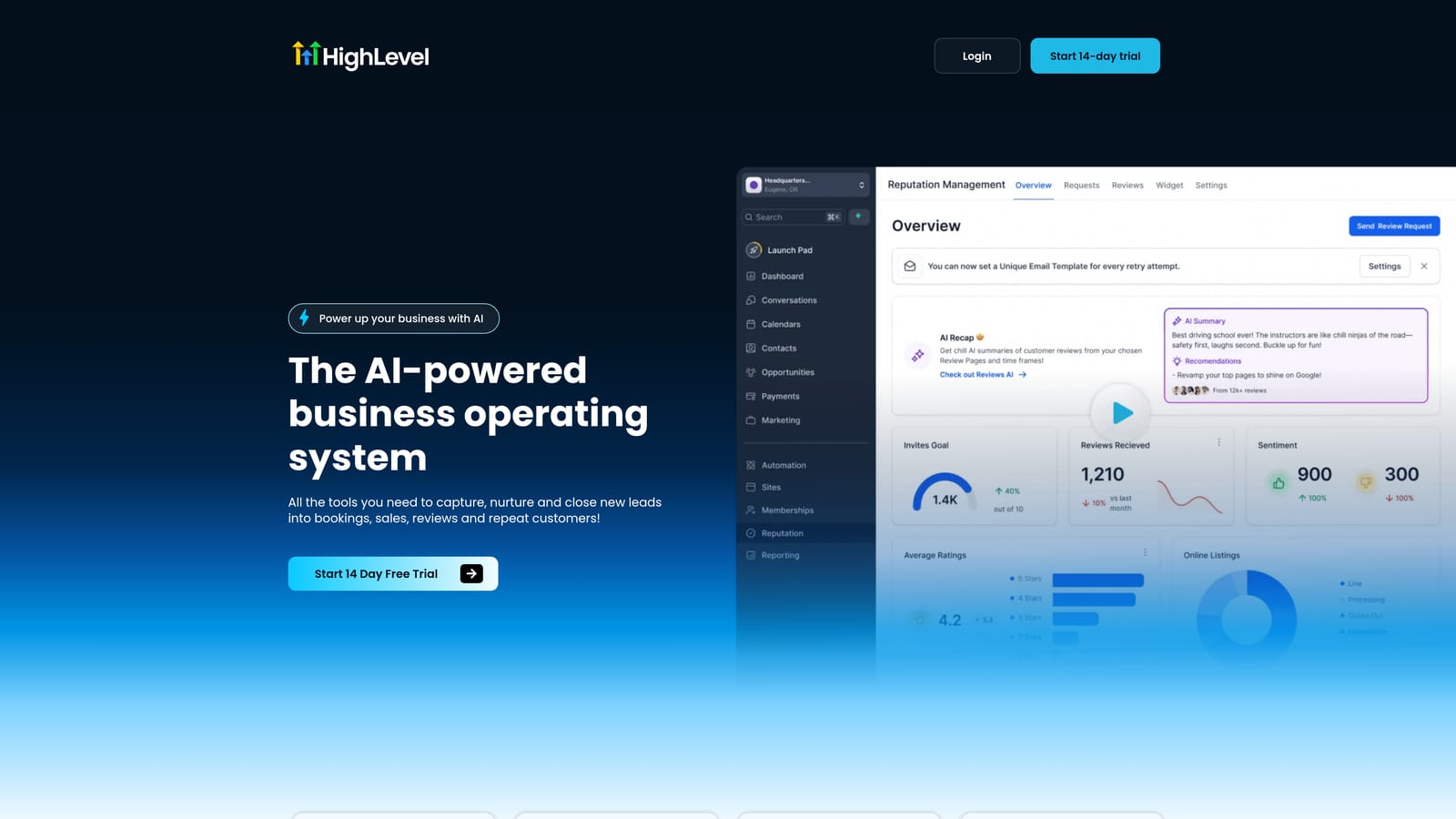
What it does that others here do not is combine the CRM with funnel building and reseller-style white-labeling, so you can offer a branded platform to clients on higher tiers.
- CRM and pipelines track leads from ad click to booked call.
- Funnels and websites let you build landing pages without separate tools.
- SMS and email automation follows up with new Facebook leads within minutes.
- Calendars and booking turn leads into appointments automatically.
- White-label options on higher tiers let you present the platform under your brand.
It integrates with Facebook Lead Ads, Messenger, Zapier, Stripe and Google Calendar. Messenger support is useful for agencies running click-to-message campaigns.
Be realistic about the learning curve. It is a large system, and getting value usually means dedicating someone to build and maintain automations. Costs are also partly usage-based, so SMS and email volume can raise the bill. Check the website for current tiers and add-ons.
Best for: Lead-gen agencies automating follow-up and reselling services.
7. Close
Close is a sales CRM centered on outreach: calls, texts and email, all from inside the record. It targets small sales teams that win business by being fast on the phone.
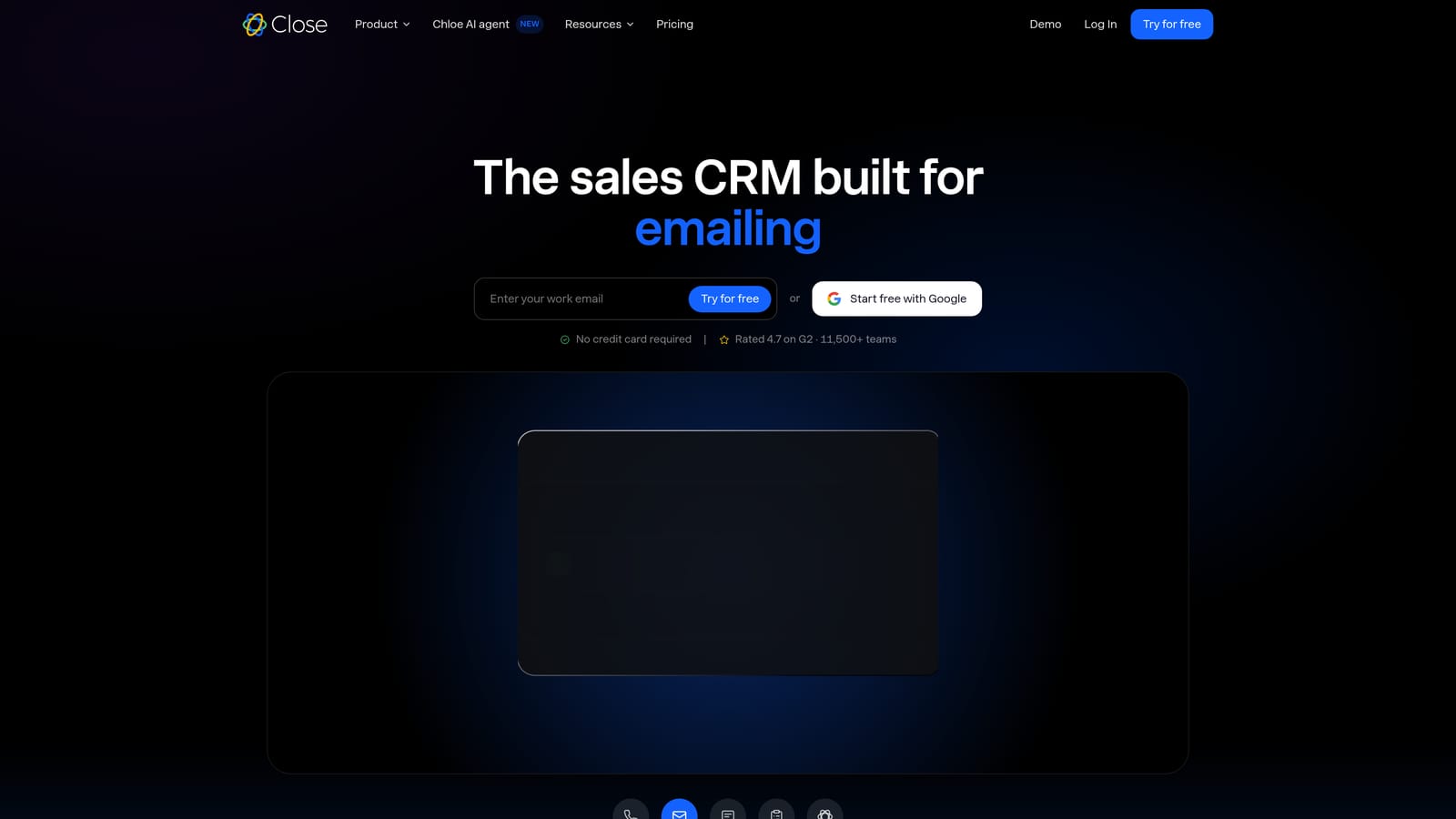
Its standout is the native dialer with multichannel sequences. Where other tools rely on integrations for calling, Close treats it as the core.
- Built-in calling lets reps dial and log calls without leaving the lead record.
- SMS and email sequences keep prospects engaged across channels.
- Pipeline views show deals by stage and status at a glance.
- Workflow automation handles reminders and repetitive outreach steps.
- Reporting shows activity and conversion so you can coach the team.
Integrations include Zapier, Google Workspace, Slack and webhooks, so Facebook leads would arrive through Zapier or a webhook rather than a dedicated connector. Setup is quick for a sales manager, and reps tend to adopt it easily.
It offers no ad performance or client reporting features, so it covers only the win-the-client half of the workflow. It is also overkill if you close mostly through email and proposals. Pricing is per user per month in tiers; see the website for current plans.
Best for: Small sales teams closing retainers via fast phone and SMS follow-up.
8. Copper
Copper is a CRM designed to work inside Google Workspace. If your agency runs on Gmail, Calendar and Drive, it feels like an extension of tools you already open every day.
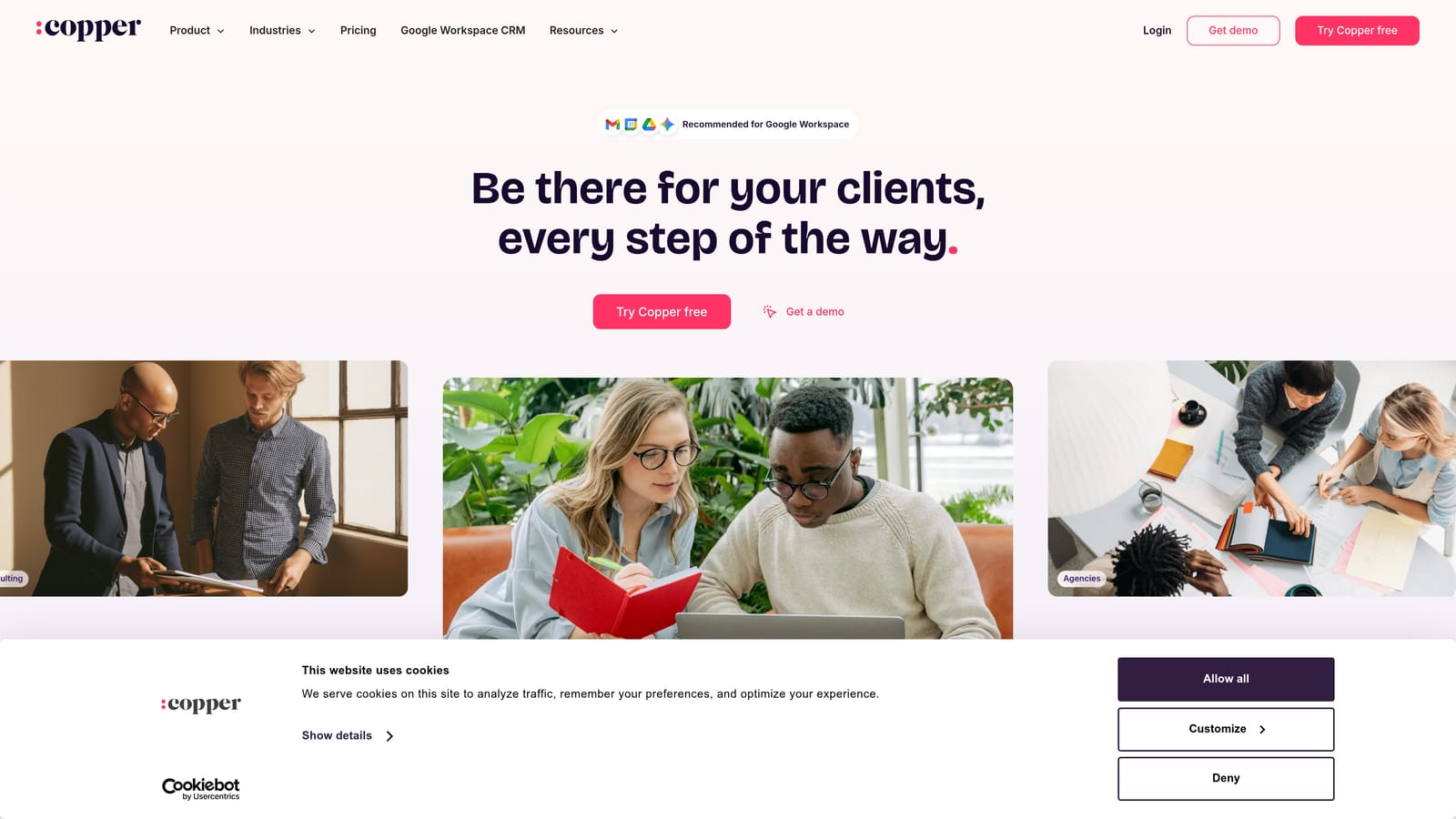
Its distinctive strength is the depth of Gmail embedding. Contacts are captured automatically from your email, and you can act on a deal without leaving the inbox.
- Gmail and Calendar integration surfaces CRM context inside your normal workflow.
- Pipeline tracking follows prospects and renewals through your own stages.
- Contact auto-capture reduces manual data entry from email threads.
- Project tracking lets you manage post-sale work alongside the deal.
- Reporting summarizes pipeline and activity for the owner.
It integrates with Google Workspace, Slack, Zapier and QuickBooks. The QuickBooks link is handy for invoicing context, though it is not payment tracking tied to ad accounts. Setup is simple for Workspace users and can be handled by the founder.
The limitations are modest automation and a higher starting price than budget options, plus a poor fit for teams on Microsoft 365. Pricing is per user per month; check the website for current plans.
Best for: Relationship-driven agencies that live in Google Workspace.
9. Agile CRM
Agile CRM is a low-cost all-in-one CRM bundling contacts, deals and email marketing. It is aimed at solo operators and very small teams who want one inexpensive tool rather than several.
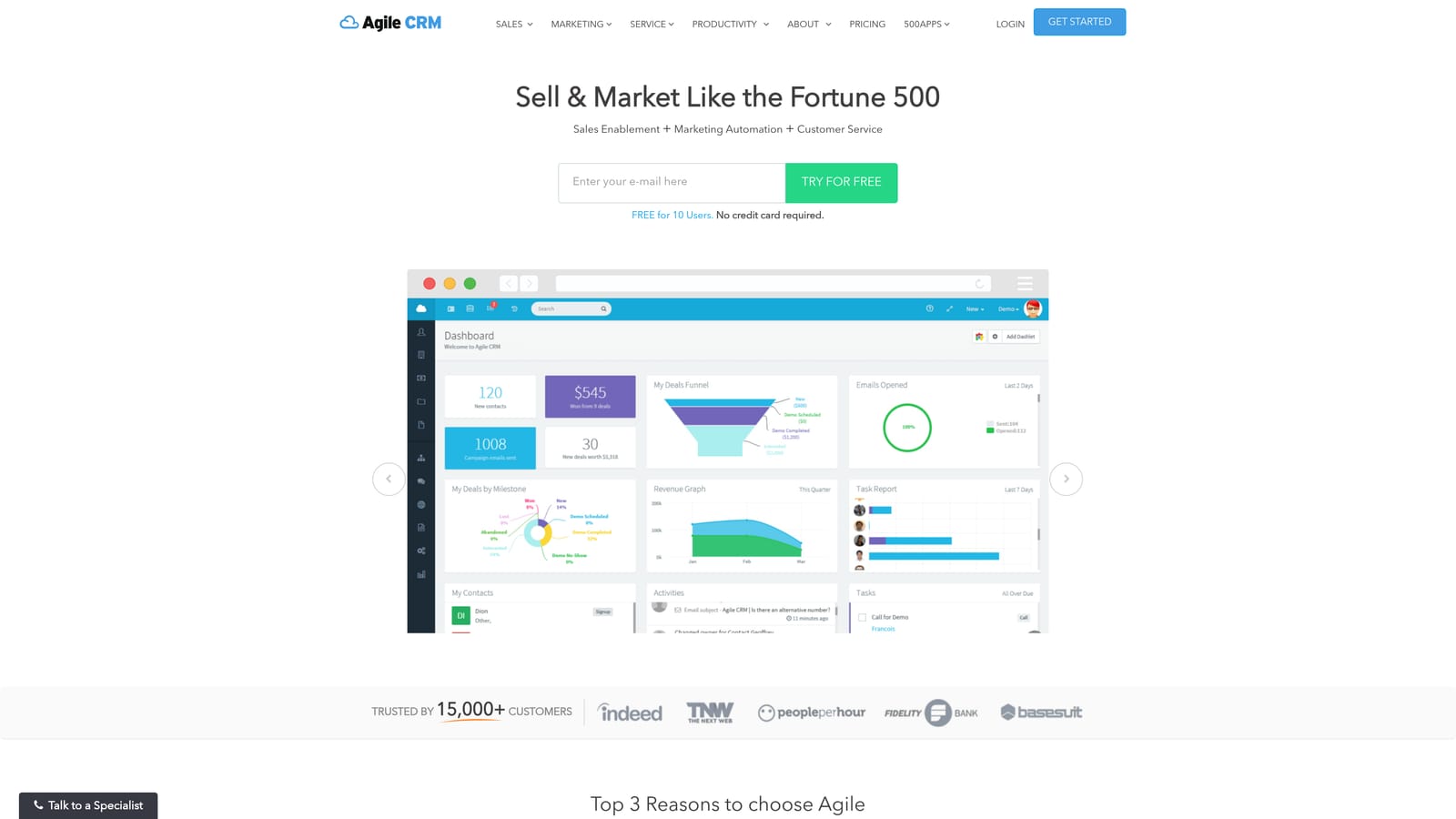
Its edge is price for the bundle. You get CRM and email campaigns together, which avoids a separate email platform for early-stage freelancers.
- Contact and deal management covers the basics of tracking prospects and clients.
- Email campaigns let you send newsletters and promotions from the same system.
- Web forms capture inquiries from your site into your contact list.
- Basic automation handles simple follow-up without extra tools.
- Appointment scheduling lets prospects book calls directly.
Integrations include Zapier, Google Workspace and Stripe, with a Facebook connection that you should verify before relying on it. Setup is light and a single person can run it.
The interface looks dated, and the ecosystem is smaller than the larger platforms, so expect to lean on Zapier for gaps. It has no ad reporting or client delivery tools. Pricing is per user; confirm on the website whether a free plan currently exists.
Best for: Solo freelancers needing a minimal-budget single tool.
Matching the Right Tool to Your Agency
These tools split into two groups: sales CRMs that help you win clients, and client-management tools that help you keep and report to them. Most Facebook ad agencies end up needing both, and no tool here honestly does everything.
- Client management and Meta Ads reporting: ClientPlug, for payments, performance and white-label reports in one dashboard. It is our own product, and it is not built for high-volume outbound prospecting.
- Sales pipelines: HubSpot for a growing inbound engine, or Pipedrive for a simpler pipeline a small team can adopt in a day.
- Lead-gen funnels and automation: GoHighLevel, if you can invest time in the learning curve and watch usage costs.
- Tight budgets: Zoho CRM or Agile CRM for freelancers, with free or low-cost entry points. Verify current plans before committing.
The practical move is to pair a sales CRM with an agency-focused tool, so prospecting lives in one place and delivery, billing and reporting live in another. Confirm current pricing and whether Facebook Lead Ads connectors are native or run through Zapier as of October 2026.