If you run a digital marketing agency or freelance practice, you probably want billing, client tracking and reporting in fewer places than a project tool, an invoicing app and a retainer spreadsheet. This guide is for owners and freelancers weighing platforms that pair client or project management with invoicing. Each tool was judged on billing depth, fit with a marketing agency's workflow, reporting, integrations, and how openly it publishes pricing. Prices and plan tiers change often, so check each vendor's site before you commit; none are quoted here as of November 2026.
Quick Comparison of Agency Management Tools with Invoicing
- ClientPlug: Meta and Google Ads agencies and freelancers; pricing on the website; ties client payment tracking to live ad performance and health monitoring.
- Productive: growing multi-service agencies; pricing on the website; profitability and utilization forecasting tied to project budgets.
- Accelo: service agencies wanting sales, delivery and billing together; pricing on the website; automates the client lifecycle from sale to invoice.
- Teamwork: delivery-focused agencies; pricing on the website; granular client collaborator controls inside a project tool.
- Bonsai: solo freelancers; pricing on the website; a contract-to-invoice workflow built for one-person businesses.
- Moxie: small agencies wanting a branded client experience; pricing on the website; a built-in branded client portal next to billing.
- Scoro: mid-sized agencies; pricing on the website; real-time financial and KPI dashboards linking sales, work and billing.
- Function Point: traditional job-based agencies; pricing on the website; agency-specific job costing and work-in-progress reporting.
- FreshBooks: small agencies that put billing first; pricing on the website; the deepest accounting and invoicing on this list.
1. ClientPlug
ClientPlug is our own product, so weigh this entry with that in mind. It is a client organizer for digital marketing agencies and freelancers who sell paid media, built to keep client payments and campaign performance in a single dashboard rather than spread across a billing app and ad platforms.
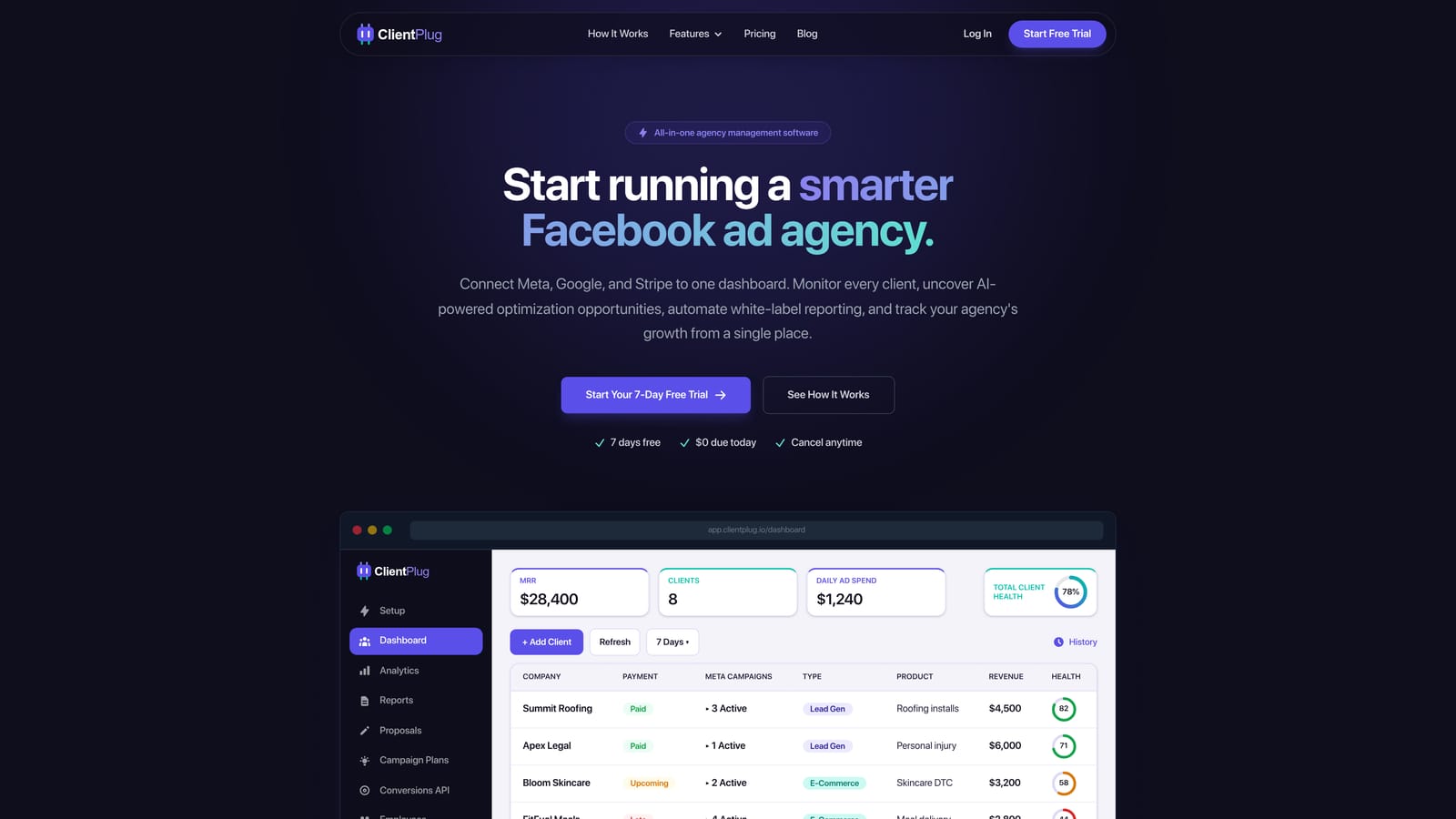
What sets it apart on this list is the pairing. Most tools here know what you billed but nothing about whether the client's ads are working. ClientPlug syncs payments, campaigns and client data, and monitors the health of individual ads, campaigns, clients and your agency overall. When a client is late on a retainer and their cost per lead is climbing, you see both facts in one place before the awkward call.
- Client payment tracking shows who has paid, who is outstanding and what is coming, without reconciling a spreadsheet.
- Meta and Google Ads performance monitoring puts every client's spend and results on one screen instead of several ad accounts.
- Automated white-label reports go to clients under your branding on a schedule, cutting monthly reporting time.
- AI campaign optimization suggests improvements to campaigns so you spot problems faster.
- Conversion API setup is handled in a few clicks, which removes a technical task many agencies dread.
Integrations focus on Meta Ads and Google Ads, so setup is mainly connecting client ad accounts. The account manager or agency owner typically runs it day to day, and it does not need a dedicated administrator.
The limits are real. ClientPlug is not a general project manager and not a full accounting system, so agencies needing task boards, resource planning, or ledger-grade bookkeeping will pair it with other software. It focuses on tracking payments; confirm on the website how invoice creation and payment processor support work for your setup before relying on it for billing. Pricing is listed on the website, and it is worth checking how it scales with the number of clients or accounts you manage.
Best for: Meta and Google Ads agencies and freelancers who want payments and campaign data together.
2. Productive
Productive is an agency operations platform covering projects, resource planning, time tracking, budgets and invoicing. It is aimed at agencies that have outgrown loose tools and need to know whether each project and client is actually profitable.
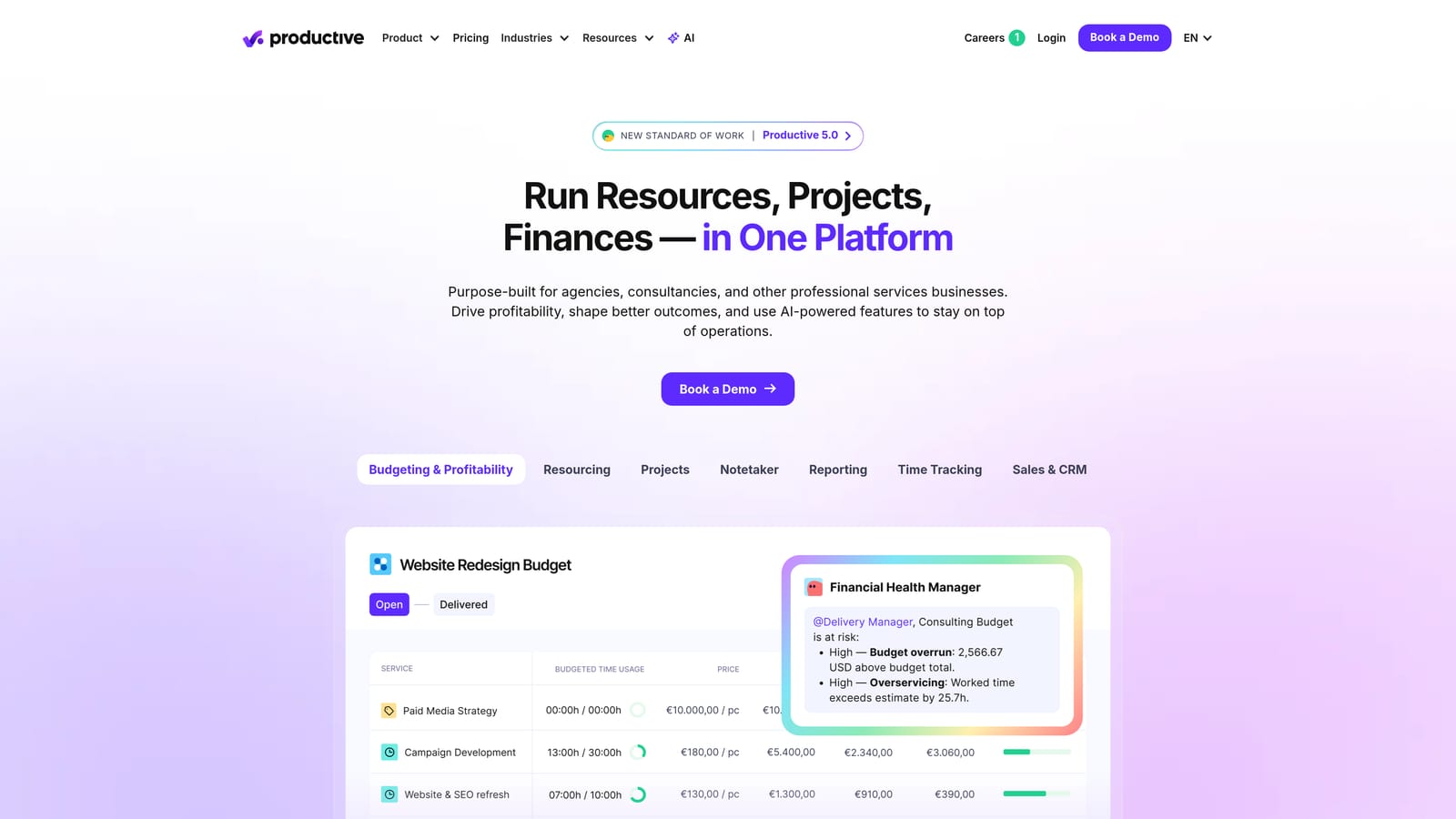
Its strength is connecting the budget to everything else. You set a budget on a project, the team logs time against it, and invoices can be generated from those budgets and logged hours. Utilization and profitability forecasting then show whether you are overservicing a retainer or have capacity for new work. That is a different kind of insight from the ad-level data in ClientPlug: Productive tells you about the economics of delivery, not campaign results.
- Project and budget management keeps scope and spend visible so overruns surface early.
- Time tracking captures the hours behind retainers and time-and-materials work.
- Resource planning shows who has capacity before you promise a deadline.
- Invoicing from budgets and time turns tracked work into bills without retyping.
- Profitability reporting shows margin by client and project.
It connects with QuickBooks, Xero and Slack, which covers most agency accounting and communication setups. Expect a heavier rollout than a simple invoicing app: budgets, rates and services need configuring, and someone such as an operations lead or finance manager usually owns it.
It is likely overkill for solo freelancers, and it has no native ad-platform reporting, so campaign results live elsewhere. Pricing is on the website and generally moves with the number of users and the plan tier, so confirm current terms as of November 2026.
Best for: Growing multi-service agencies managing budgets and team capacity.
3. Accelo
Accelo is client work management software that combines CRM, projects, tickets, retainers and billing. It targets professional service businesses that want one system to carry a client from first inquiry to final invoice.

The distinctive part is the lifecycle automation. A deal won in the sales pipeline can become a project or retainer, work is tracked against it, and billing follows from time or the retainer schedule. For agencies that sell a mix of ongoing retainers and one-off projects, this removes the handoffs where billable work usually slips through.
Where it fits the workflow
- CRM and sales pipeline track prospects and convert wins into delivery work.
- Retainer management handles recurring fees and the hours or deliverables included.
- Time-based billing turns logged hours into invoices at set rates.
- Ticketing gives clients a way to submit requests so ad hoc work is captured, not done for free.
- Project management covers tasks and milestones for fixed-scope work.
Setup, limits and cost
Accelo integrates with QuickBooks, Xero and Google Workspace. Onboarding is more involved than with lighter tools, because you are configuring a pipeline, work types and billing rules, and the system tends to need an owner on the operations side.
The trade-off is price and complexity: it costs more than most options here and is too much for a freelancer or tiny team. It also does not report on ad performance. Pricing is on the website and typically depends on plan and number of users, so verify current figures as of November 2026.
Best for: Service agencies that want sales, delivery and billing in one system.
4. Teamwork
Teamwork is a project management platform with client collaboration, time tracking and billable rates. Billing is a secondary function here: the product is built first for delivering work, and it suits agencies whose pain is coordination more than invoicing.
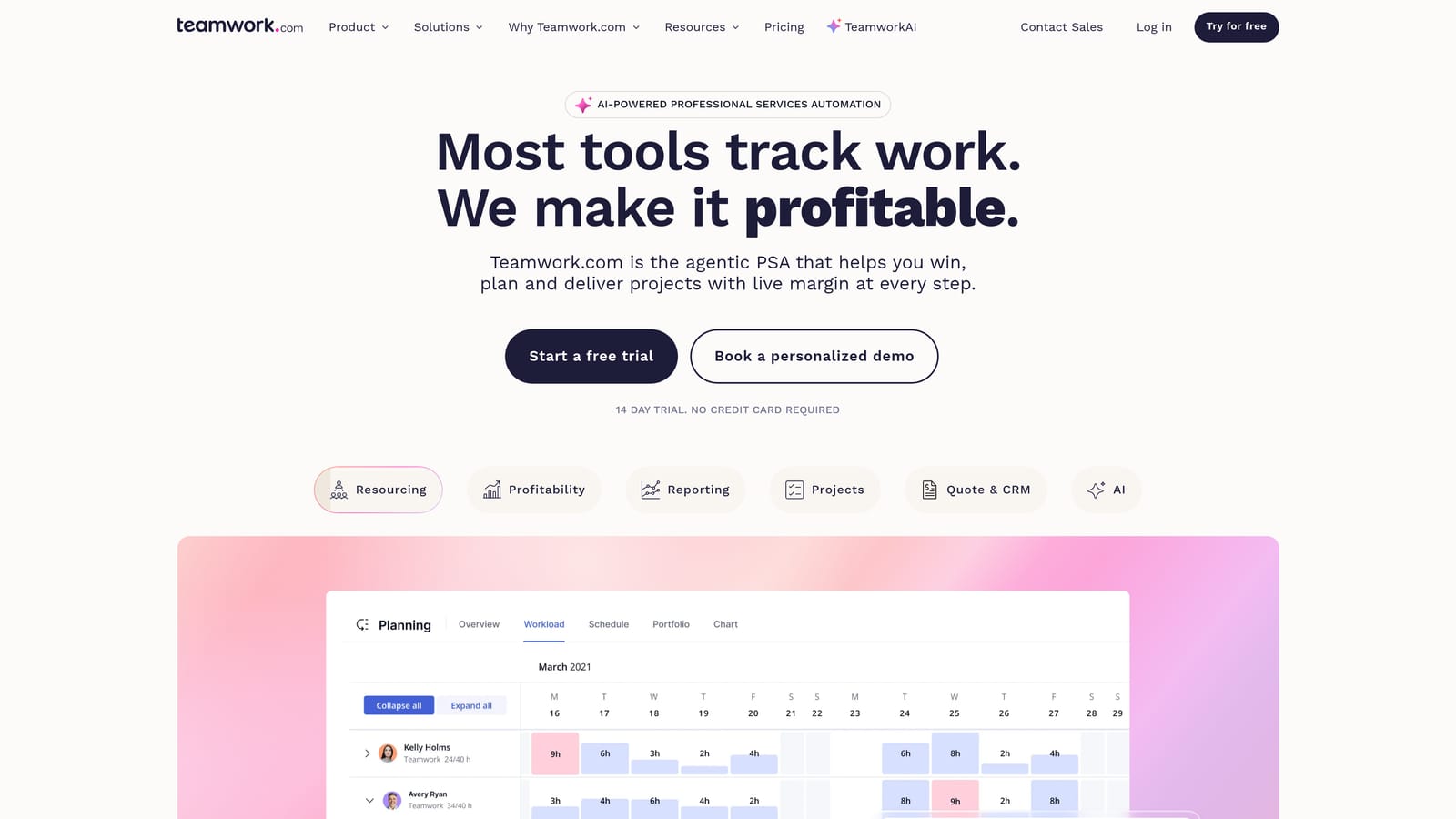
Its edge over the rest of this list is how it handles clients inside the project space. You can bring clients in as users with controlled permissions, deciding what they see and comment on, which keeps feedback and approvals in one place rather than in email threads. Few billing-led tools offer that level of project-side control.
- Task and project management organizes campaigns, deliverables and deadlines for the whole team.
- Time tracking with billable rates records which hours are chargeable and at what rate.
- Client user permissions let clients review and approve work without seeing internal tasks.
- Budgets flag when a project is burning through its allowance.
- Invoicing on eligible plans turns billable time into invoices; check which tier includes it.
It works with QuickBooks, Xero and Slack, so invoices commonly flow into accounting software for the heavier lifting. Project managers usually run it daily, and setup is moderate: templates and permissions take some thought, but it is far lighter than a full operations suite.
The limitation is that invoicing is lighter than in dedicated billing tools, and it can sit on higher plans. Retainer-heavy agencies may find the billing thin. There is also no ad reporting. Pricing is on the website and varies by plan and user count; confirm current tiers as of November 2026.
Best for: Delivery-focused agencies that need project management first and billing second.
5. Bonsai
Bonsai is a suite for freelancers and small agencies covering proposals, contracts, invoices, time tracking and expenses. It is designed around the solo operator who wants to win a client, sign them and get paid without stitching together several apps.
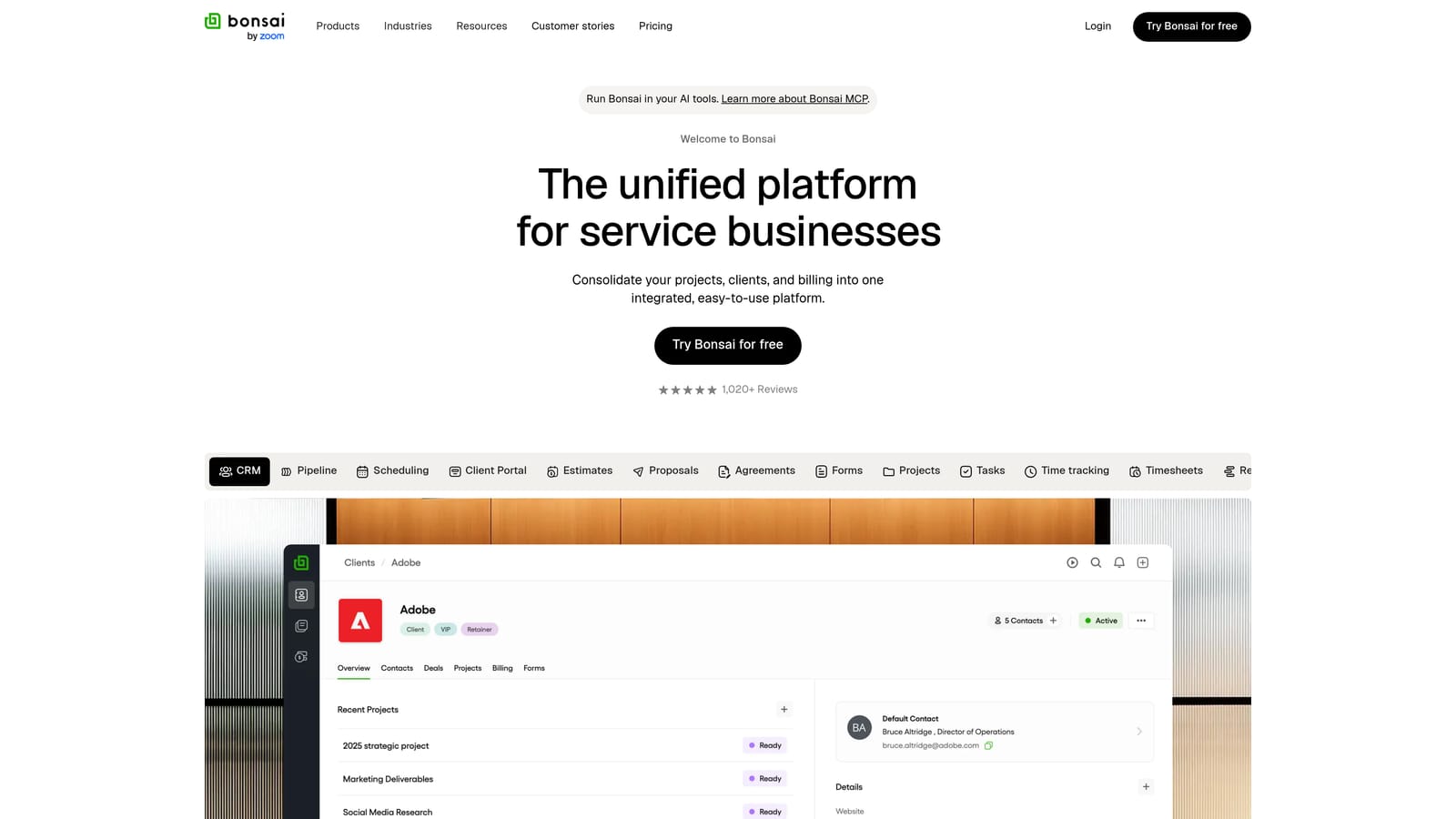
Its distinctive strength is the paperwork chain. A proposal becomes a contract, and the work then feeds invoices, so the commercial terms you agreed travel into billing. For a freelancer running paid social for a handful of clients, that sequence covers most administrative needs.
- Proposals and contracts get terms signed before work starts, which reduces scope disputes.
- Recurring invoices automate monthly retainer billing so you stop re-creating the same bill.
- Payment reminders chase late invoices on your behalf.
- Time tracking supports hourly clients and shows where retainers are stretched.
- Expense tracking keeps ad-related costs and tools organized for tax time.
It integrates with QuickBooks, Stripe and PayPal, so clients can pay by card or PayPal and records sync to accounting. Setup is quick, and the freelancer or owner runs everything alone.
The limits show up as you grow. Team and resource management are limited, so agencies with several staff and shared capacity will outgrow it. It also offers no ad performance reporting. Pricing is on the website and usually depends on plan tier, so check the current structure as of November 2026.
Best for: Solo freelancers who want paperwork and billing in one tool.
6. Moxie
Moxie is an all-in-one platform for freelancers and small agencies that bundles CRM, projects, invoicing and a client portal. It sits between a solo tool like Bonsai and a larger operations suite.
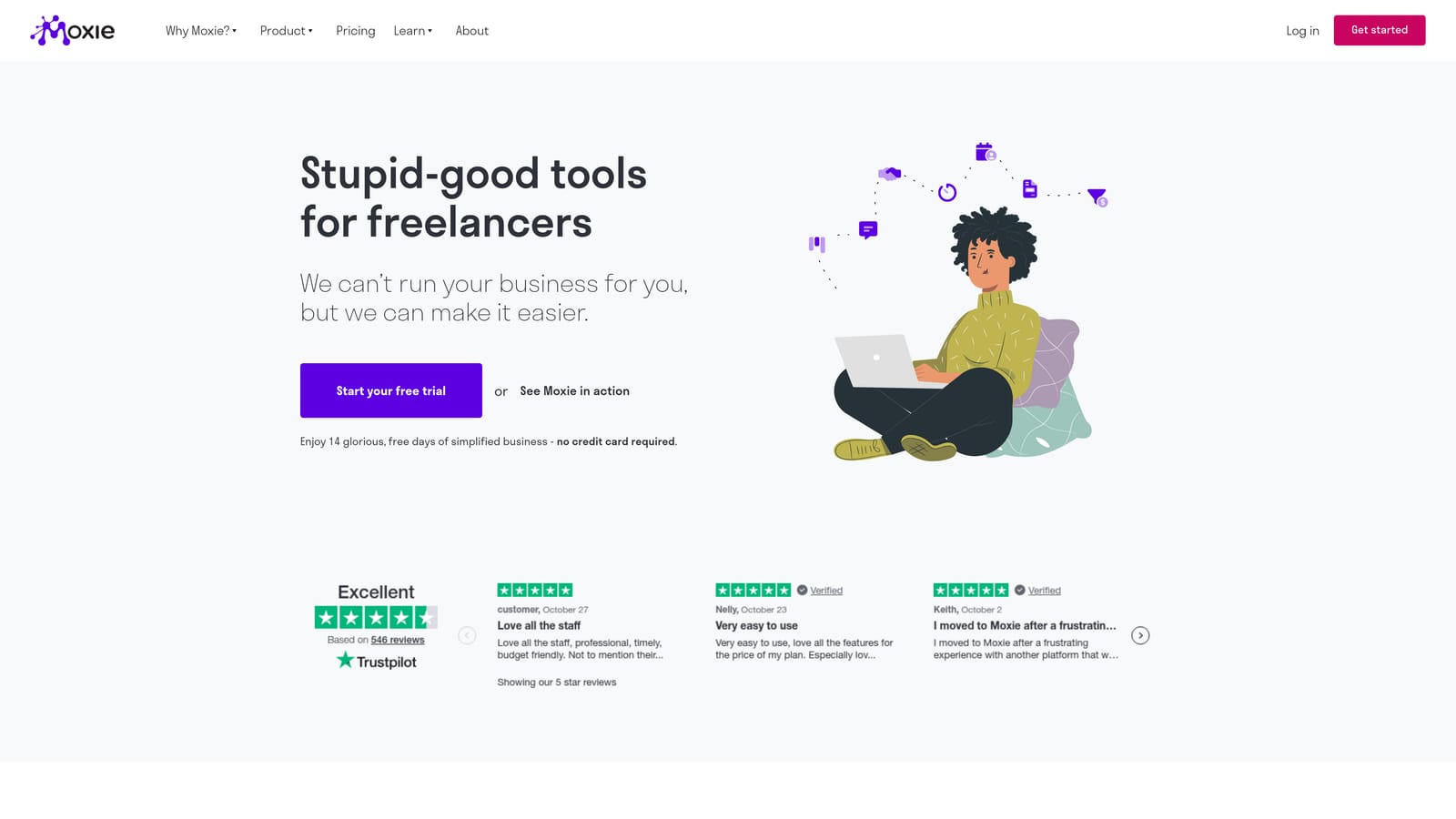
The standout is the branded client portal sitting beside billing. Clients log in to see project status, files, proposals and invoices under your brand, so the experience looks polished without you assembling several tools. For a small agency competing on professionalism, that matters more than extra feature depth.
- Client portal gives each client one branded place for work, documents and bills.
- CRM tracks leads and clients so sales and delivery share a record.
- Proposals speed up quoting and lead to signed work.
- Recurring invoicing automates retainers and repeat billing.
- Time tracking records billable hours for hourly work.
It connects with Stripe, QuickBooks and Zapier, and Zapier extends it to tools it does not natively support. Setup is light, and the owner usually runs it alone or with one admin.
Be aware of the smaller ecosystem and lighter reporting compared with larger platforms: there are fewer native integrations and no ad-platform reporting, so you will report on campaigns elsewhere. Pricing is on the website and generally depends on plan; verify current rates as of November 2026.
Best for: Small agencies wanting a branded client experience without extra tools.
7. Scoro
Scoro is a work management platform for agencies and professional services covering quotes, projects, billing and reporting. It is aimed at mid-sized firms where leadership needs a live picture of money and workload across everything in flight.
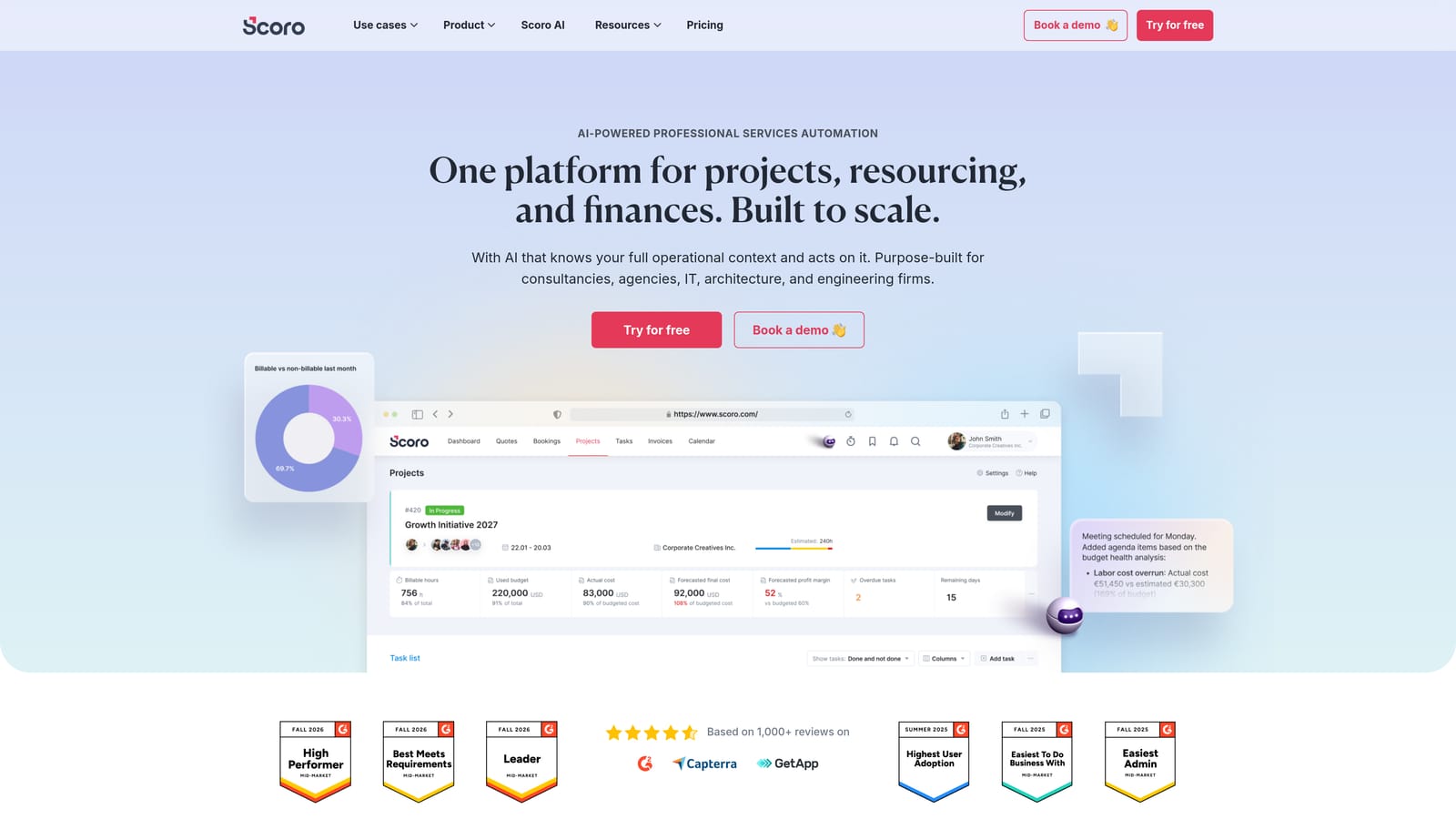
The differentiator is financial visibility. KPI dashboards link sales quotes, project progress and billing, so you can see quoted versus delivered versus invoiced in real time. Where Productive leans on utilization and profitability, Scoro leans on a company-wide dashboard view.
- Quotes to invoices carry an agreed price through to billing without re-entry.
- Project and budget tracking compares actual effort and cost to plan.
- Recurring billing handles retainer invoices on a schedule.
- KPI dashboards turn sales, delivery and revenue data into one management view.
- Resource planning shows team workload so you can schedule realistically.
It integrates with QuickBooks, Xero and Google Calendar. Implementation takes real effort, since quotes, rates and dashboards must be configured, and it typically needs an operations or finance owner to maintain.
The main drawback is premium pricing, and the vendor has historically applied minimum user requirements, so small teams may find it poor value. Confirm current terms. It does not include ad performance reporting. Pricing is on the website and moves with plan and user count; check as of November 2026.
Best for: Mid-sized agencies that need financial visibility across all projects.
8. Function Point
Function Point is agency-focused management software with estimating, time tracking, job costing and billing. It reflects the traditional agency model, where a job is estimated, tracked against cost and billed against that estimate.
Its distinctive strength is job costing and work-in-progress (WIP) reporting. WIP shows work performed but not yet billed, which is where agencies quietly lose revenue. Few tools here treat that as a core report, so job-based shops get detail the lighter tools cannot offer.
- Estimating produces job quotes that become the baseline for tracking.
- Time tracking records hours against each job and task.
- Job costing compares actual cost to estimate so you see margin per job.
- WIP reporting reveals unbilled work before it ages.
- Invoicing bills against jobs and estimates.
The listed integration is QuickBooks. Setup is substantial because estimates, rates and job structures need defining, and a production manager or finance lead typically owns it.
Reviewers have described the interface as dated, and it can be costly for small teams. Verify the product's current availability and support status directly with the vendor before shortlisting it. There is no ad reporting. Pricing is on the website or by quote, so confirm as of November 2026.
Best for: Traditional agencies with job-based billing and detailed costing.
9. FreshBooks
FreshBooks is accounting and invoicing software with time tracking, expenses and light project features. It is not agency management software in the strict sense, but many small agencies use it as the billing backbone, and it earns a place here because its invoicing is the strongest on this list.
It does accounting-grade work the others only approximate: polished invoices, recurring billing, online payments and expense records tied to a proper bookkeeping view. If your priority is getting paid cleanly and keeping tidy books, it does that better than any project-led tool.
- Invoicing produces professional, customizable bills clients can pay online.
- Recurring billing automates monthly retainers.
- Expense tracking captures costs such as ad spend you pass through to clients.
- Online payments speed collection through card and bank options.
- Client retainers let you hold and draw down prepaid funds.
It integrates with Stripe, PayPal and Zapier, and setup is fast; the owner or a bookkeeper can run it. Its project features are light.
The limitation is scope: no ad reporting and no advanced project or resource management, so you would pair it with a delivery tool. Pricing is on the website and usually depends on plan tier and the number of billable clients, with add-ons sometimes charged separately; confirm current rates as of November 2026.
Best for: Small agencies whose top priority is polished billing and bookkeeping.
Matching the Right Tool to How Your Agency Bills
Four situations cover most buyers:
- Ad-focused agencies and freelancers: ClientPlug, because it keeps payments next to live Meta and Google Ads performance and sends white-label reports. Pair it with an accounting tool if you need full bookkeeping.
- Retainer-heavy full-service agencies: Productive or Accelo, depending on whether budget and capacity forecasting or a sale-to-invoice pipeline matters more. Scoro suits larger teams that want executive dashboards.
- Solo freelancers: Bonsai for contract-to-invoice simplicity, or Moxie if a branded client portal matters.
- Accounting-first teams: FreshBooks, with a project tool such as Teamwork alongside it.
Before you commit, trial two tools against a real month of your invoices: retainers, hourly work, pass-through ad spend and a late payer. The one that handles your messiest client without workarounds is usually the right choice.